The Need for Speed

The Importance of Speed in Basketball

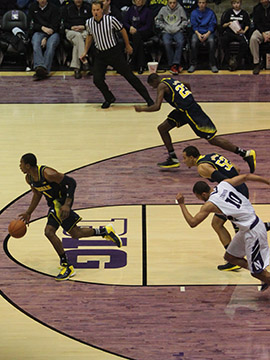
Basketball is a game of intensity and quick transitions. A key determinant of success in this adrenaline-fueled sport is speed. But when we say ‘speed,’ we’re not merely referring to how fast a player can sprint from one end of the court to the other. Speed in basketball is multidimensional—it encompasses physical agility, mental acuity, and strategic adaptability.

Physical Speed and Agility

Strength and agility allow an athlete to exercise better control. An agile athlete can change direction quickly and outrun his/her opponent.

Norbert Juma, Editor of EverydayPower.com

At its core, basketball requires physical speed. The ability to swiftly maneuver around the court, both offensively and defensively, can have a profound impact on a player’s performance. The ability to move confidently allows players to reach the basket quicker, defend more effectively, and react to changes in the game instantaneously. It can mean the difference between a well-executed fast break and a missed opportunity.

Speed also ties in closely with agility—the capacity to change direction quickly and efficiently. Agile players are able to dodge defenders, swiftly shift between offensive and defensive modes, and maintain control of the ball under pressure. As Bill Russell famously said, “Quickness is the essence of the game.”

Mental Agility and Decision-Making

“Speed is not just about moving fast;
it’s about making fast decisions.”

John Wooden

Speed, however, is not solely a physical attribute. Cognitive agility —the ability to quickly process information, make decisions, and react accordingly—is equally vital in basketball. When a player has the ball, they need to rapidly assess the situation, consider their options, and make a decision, all in a matter of seconds. This mental agility significantly influences a player’s effectiveness on the court.

Quick decision-making can contribute to efficient plays, reduced turnovers, and well-timed passes. It’s a key factor in running a smooth offense and making split-second decisions that can change the course of the game. As the great basketball coach John Wooden once stated, “Failure is not fatal, but failure to change might be.”

Strategically Fast and Adaptable?

Finally, strategic speed—the capability to adapt game plans in response to the opponent’s tactics—plays an instrumental role in basketball. In a dynamic and unpredictable game, a team’s ability to quickly adjust their strategy can be the difference between winning and losing.

Coaches and players must observe the opposing team, recognize patterns, anticipate their moves, and adjust their own tactics on the fly. Successful teams are those that can swiftly shift strategies without losing momentum, capitalizing on their strengths and exploiting their opponents’ weaknesses.

Training for Speed

Given its vital role in basketball, it’s essential for players to train for speed. This includes both physical training—such as sprinting drills, agility ladders, and plyometric exercises—and cognitive training, such as learning to read the game, understanding different strategies, and practicing quick decision-making.

But as Michael Jordan suggested, it’s not about wishing for it to happen; it’s about making it happen. Consistent effort, perseverance, and a growth mindset are required to improve speed. Every practice, every drill, every game is an opportunity to become faster—physically, mentally, and strategically.

Do you have “The Need for Speed”?

I feel very comfortable going at full speed.

Steve Nash, NBA All Star and League MVP

In basketball, speed is far more than just a physical trait—it’s a fundamental element that permeates every aspect of the game. From physical agility to mental acuity, from strategic adaptability to constant learning, speed in its various forms can give players and teams a significant advantage.

In the words of the great basketball coach, Phil Jackson, “Basketball is a sport that involves the subtle interweaving of players at full speed to the point where they are thinking and moving as one.” Speed—whether physical, mental, or strategic—is at the heart of this interweaving, and mastering it is crucial to basketball success.

So, whether you’re a player aiming to improve your game or a coach looking to guide your team to victory, remember—the importance of speed in basketball can never be overstated. As the game continues to evolve, speed remains a key component, underscoring its timeless relevance in this fast-paced sport.

Have you commented yet?

We would love to hear what you thought of this article. What can you add to this topic? How does it compare to our other articles... better, worse, different?

Flying Fastbreak Basketball …

Harnessing the “FAA approach” :

The Power of Focus, Anticipation, and Action

How to Fly:
Fastbreak Basketball

In the world of fast-break basketball, there’s a formula that transcends physical prowess and defines true success when it comes to developing teams with the ability to “FLY”: the acronym is FAA, which stands for: Focus, Anticipation, and Action. This threefold approach, reminiscent of aviation, holds the key to soaring new heights in basketball. Whether you’re a player seeking to improve your game or a coach aiming to guide your team to victory by playing fast-break basketball, understanding the FAA strategy can give you a distinct advantage.

FocusHow to Elevate Your Fastbreak Game

Basketball is a sport that requires absolute concentration. Among the din of cheering crowds and the pressure of the ticking clock, a player’s focus can mean the difference between a victory and defeat. Renowned basketball coach Phil Jackson, who led the Chicago Bulls and the Los Angeles Lakers to a combined total of 11 NBA championships, once declared, “The strength of the team is each individual member. The strength of each member is the team.”

This profound insight highlights the importance of each player focusing on their role and contributing their best to the team. This sense of focus is what defined the career of basketball legend Kobe Bryant. Known for his ‘Mamba Mentality,’ Bryant’s unwavering focus allowed him to deliver astounding performances under extreme pressure. He demonstrated that honing focus is the first step to achieving basketball greatness.

To cultivate focus in both practice and games, start with setting clear, specific goals. It might be improving your shooting accuracy, perfecting your defensive play, or enhancing your team dynamics. Such tangible targets provide a guidepost for your focus and an objective measure of your progress.

Focus = block out the rest of the world.

A crucial aspect of mastering focus in fastbreak basketball is the ability to block out external distractions and immerse oneself entirely within the boundaries of the court. Whether it’s the noise from the crowd, personal anxieties, or external pressures, a player’s capacity to disconnect from these factors and center their attention entirely on the game is paramount to performance.

Imagine the court as an island, and as soon as you step onto it, the rest of the world fades away. All that matters in those moments of play is the ball in your hand, your teammates around you, the opponents facing you, and the basket beckoning you.

Renowned NBA player LeBron James aptly summarizes this in his quote, “When you get on the court, compete. It doesn’t matter if you miss shots, it doesn’t matter what happens, as long as you compete.” This level of focus can only be achieved when a player is entirely present on the court, undistracted by thoughts or concerns outside the lines.

Developing Tunnel Vision

This level of intense concentration and ‘tunnel vision’ can be honed over time through various mindfulness techniques. For instance, meditation and visualization practices can help athletes clear their minds, increase concentration, and maintain a singular focus during the game.

Additionally, athletes can use techniques such as controlled breathing and positive self-talk to remain calm and focused, even during high-pressure situations. In essence, the court becomes a meditative space where the outside world ceases to exist, and all that matters is the game.

Focus… the body

But it’s not just about mental preparedness. Physical preparation, consistent training, and maintaining peak physical condition also contribute to an athlete’s ability to stay focused. When you trust in your skills and fitness, you free up mental capacity to focus on the game’s strategic aspects. This focus, combined with physical readiness, will empower you to perform your best within those lines, leading you and your team to consistent victories.

Remember, achieving a razor-sharp focus on the court isn’t just about forgetting the outside world; it’s about transcending it. It’s about entering a state of flow where every pass, every dribble, every shot is instinctive, deliberate, and precise. And that’s when you know you’re not just playing the game; you’re mastering fastbreak basketball.

Anticipation – Key to Fastbreak Basketball

In the FAA strategy, anticipation forms the critical middle ground. It entails using your understanding of the game to foresee what’s coming next.

Larry Bird, one of the greatest basketball players of all time, had an uncanny ability to anticipate plays before they unfolded. He once said, “I’ve got a theory that if you give 100% all of the time, somehow things will work out in the end.” This perspective reflects Bird’s commitment to studying his opponents, recognizing patterns, and leveraging this information to stay one step ahead.

Build your Anticipation Skills

There are a number of ways to enhance your anticipatory skills including investing time in studying the game, watching games at all levels, scrutinize specific player movements, and understanding various team strategies both offensively and defensively. Remember, basketball isn’t just a physical game; it’s a mental challenge akin to chess.

Anticipation in basketball can be compared to predicting the future in life – both require understanding, discernment, and quick decision-making. Just as chess players must think multiple steps ahead, basketball players need to predict the game’s flow to make effective moves. This anticipation can significantly influence a player’s performance and the game’s outcome.

Ways to enhance your anticipatory skills in basketball:

Invest time in studying the game: Deeply understanding the game’s mechanics – the rules, the scoring system, different play styles – provides a strong foundation for anticipation. Each game you watch or play is a rich source of learning and offers numerous scenarios that can boost your ability to predict outcomes in various situations. The more you understand the game’s intricacies, the better you’ll be at predicting what comes next. As you watch the action within a game, ask yourself, “What comes next? What is the other team trying to do?”

Watching games at all levels: There’s a lot to learn from observing others, whether it’s professional NBA matches, college-level games, or local leagues. Watching different players and teams will expose you to diverse strategies and styles of play, broadening your understanding of what’s possible on the court. Take notes on unique moves, effective strategies, and notable player dynamics. Over time, patterns will emerge, further honing your anticipatory abilities.

Scrutinizing player movements: Part of anticipation is understanding player behaviors – how they react under pressure, their go-to moves, how they signal their next actions, and so forth. Each player has a unique ‘signature style,’ and recognizing this can provide valuable clues about potential game outcomes. As Sun Tzu famously said, “Know thy enemy and know yourself; in a hundred battles, you will never be in peril.”

Understanding team strategies: Every effective basketball team operates under a well-coordinated strategy. By understanding these strategies – both offensive and defensive – you can predict team moves and respond effectively. This knowledge will enable you to ‘read’ the game better, anticipate the play, and position yourself for maximum impact.

It’s important to remember that anticipation is a skill that can be developed over time and requires consistent effort. As legendary UCLA coach John Wooden stated, “Basketball is not a game of speed and quickness, but of skill and coordination. It’s not how fast you move, but how effectively you move.” I would add to that… if you move effectively (and anticipate well), you will appear to have more speed and quickness than you really do.

Mastering anticipation will require you to move beyond the physicality of the sport and delve into the game’s intellectual depths. Like a chess player studying the board, you too must learn to analyze the court, foreseeing your opponent’s moves, and planning your strategy accordingly. With persistence and practice, your anticipatory skills will grow, enabling you to outmaneuver your opponents, lead your team, and excel in the dynamic game of basketball.

ACTION = Fastbreak Basketball

The final component of the FAA formula is Action. As the legendary Michael Jordan said, “Some people want it to happen, some wish it would happen, others make it happen.”

This crucial step is about taking your focused goals and anticipated strategies and bringing them to life on the court. It’s about making the shot, executing the defensive play, and setting up your teammate for success.

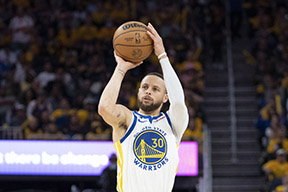
Consider Stephen Curry, revered for his three-point shooting prowess. Curry didn’t stumble upon this skill by chance. He focused on perfecting his shooting, anticipated the room in the game for an extraordinary shooter like him, and took action, practicing for countless hours to become one of the greatest shooters in basketball history.

Have you commented yet?

We would really like to hear what you think about this article. Was it helpful? Was there something that it missed? Do you have an example of anything presented in the article that either worked well or flopped big time? Either way, we would love to hear your thoughts on fastbreak basketball!

Recommended Books & How They Relate to FAA

  1. The Mamba Mentality: How I Play” by Kobe Bryant: This book delves into Bryant’s focus and determination that led to his successful career.
  2. Drive: The Story of My Life” by Larry Bird: Bird’s autobiography provides insight into his ability to anticipate moves on the court and his dedication to the game.
  3. Sacred Hoops: Spiritual Lessons of a Hardwood Warrior” by Phil Jackson: Jackson shares his approach to coaching and the importance of focus, anticipation, and action in a team setting.
  4. Golden: The Miraculous Rise of Steph Curry” by Marcus Thompson: The book examines Curry’s journey to the NBA, including his deliberate focus on three-point shooting and the actions he took to perfect it.
  5. Relentless: From Good to Great to Unstoppable” by Tim Grover: Grover, who trained athletes like Michael Jordan and Kobe Bryant, discusses the mental toughness required to take decisive action in high-pressure situations.

Additional Quotes on Focus, Anticipation, and Action

  1. “The key to success is to focus our conscious mind on things we desire not things we fear.” – Brian Tracy
  2. “Winning is about anticipation. Understanding where the ball is going and being there.” – Rod Laver
  3. “Focused mind power is one of the strongest forces on earth.” – Mark Victor Hansen
  4. “The greatest weapon against stress is our ability to choose one thought over another.” – William James
  5. “The future depends on what you do today.” – Mahatma Gandhi
  6. “Action is the foundational key to all success.” – Pablo Picasso
  7. “Anticipation is the ultimate power. Losers react; leaders anticipate.” – Tony Robbins
  8. “What you focus on expands, and when you focus on the goodness in your life, you create more of it.” – Oprah Winfrey
  9. “The anticipation of suffering is worse than actual suffering itself.” – Paulo Coelho
  10. “Do you want to know who you are? Don’t ask. Act! Action will delineate and define you.” – Thomas Jefferson

Remember, whether you’re on or off the court, the FAA strategy – Focus, Anticipation, and Action – can empower you to reach new heights within fastbreak basketball. The sky is not the limit; it’s merely the beginning. So fly high, and never stop reaching!

Hustling like a Winner

It’s been said before, but, in the foundations of winning, Hustling is a key cornerstone. As often observed in sports, business, or any area demanding relentless competitiveness, it’s the quintessential difference-maker—the trait that often sets the exceptional apart from the ordinary. It’s a defining superpower, a competitive tool, a unique differentiator, and a core component of any winning strategy.

The Decision that leads to Hustling

Geno Auriemma, the esteemed coach of the UConn women’s basketball team, insists that “Attitude is a choice.” So too, is the decision to hustle. Hustle isn’t merely about raw effort. It’s strategic and purposeful. Like Auriemma’s squads meticulously dissecting their opponents on the court, you, in life and business, have to understand your competition and the dynamics of your playing field. Hustling is about reading the game, anticipating the next moves, and responding with unmatched swiftness and decisiveness.

But hustle doesn’t mean being reckless. It’s rapid, yes, but it’s also calculated. It’s about making your presence felt, creating opportunities, and seizing control. A true hustler is a disruptor, altering the course of the game.

Hustling as a Strategy

Hustle isn’t a standalone trait; it’s intrinsically woven into the fabric of a winning strategy. John Wooden, the Wizard of Westwood, was known to say, “Talent is God given. Be humble. Fame is man-given. Be grateful. Conceit is self-given. Be careful.” When the talent on the court is well-matched, the team that hustles—that gives a little more, fights a little harder—often tips the balance in their favor.

Your strategic hustle involves determination, resilience, and an unyielding will to win. It means running for every loose ball as if your life depends on it. Because, metaphorically, it does. Your future, your success, your victory—they all hang in the balance.

Differentiation Through Hustle

In a world where everyone is working towards achieving greatness, hustle is what sets you apart. It’s the mark of your identity, an unwavering testament to your determination and grit. Your relentless pursuit of your goals underscores your hustle, making you stand out from the crowd. When the going gets tough, your hustle will carry you through.

In the words of Croix Sather, the “Marathon Man” of motivation and peak performance, “If you don’t challenge yourself, you will never realize what you can become.” Hustle is your challenge to yourself, an unspoken pledge to push your limits.

Building Your Hustle Muscle

Are you hustling?

There will be days when your spirit will flag and your motivation will hit rock bottom. On such days, recalling the wisdom of Jim Rohn, the motivational speaker who said, “Either you run the day or the day runs you,” can be particularly useful. Rohn understood that developing your hustle muscle might not be straightforward, but it’s essential.

Start with small steps, maintain consistency, and soon, your hustle muscle will become stronger. If you stumble, learn to pick yourself up and get back in the game. Resilience is the true essence of hustle.

Tony Robbins, the renowned life coach, often reminds us that “The only impossible journey is the one you never begin.” Similarly, you can’t build your hustle muscle if you never start. So, kickstart your journey, however daunting it might seem, and let your hustle guide you.

Spreading the Hustle

In any team or organization, fostering a culture of hustle can turbocharge the path to success. As a leader, your hustle should inspire your teammates. Let them witness your drive, your passion, your unrelenting pursuit of your goals. Set an example; become the embodiment of hustle.

Just as Coach K did at Duke, Dean Smith did at North Carolina, and John Wooden did at UCLA, be the kind of coach who encourages, uplifts, and instills the power of hustle in your team. Remember, hustle is contagious. Encourage it, and it will spread like wildfire.

In conclusion, the power of hustling is undeniable. It is a superpower, a beacon guiding you to victory. It’s a competitive tool, a key strategy, and a unique differentiator. So, embrace the grind, let your hustle roar, and watch as it carves the path to your success. The wisdom of these coaching legends, motivational speakers, and high-performance experts reinforces one undeniable truth: Winning isn’t merely given—it’s earned, and hustling is integral to that journey.

Comments, please

Please leave a note at the bottom of this post and tell us what you liked and what we might have missed. We appreciate that you are hustling and hopefully your words will inspire some of the others that are hustling as well.

Top 10 – Bonus resources re: Hustling:

Here are some additional places that you can get valuable information. Most are links to books on Amazon.com (and you can help us out if you purchase through the links, at no cost to you).

Wooden: A Lifetime of Observations and Reflections On and Off the Court” by John Wooden

A rich account of Coach Wooden’s life principles, lessons learned from basketball, and the philosophy behind his coaching success, this book delves deep into Wooden’s ideas of success, teamwork, and hustle.


Geno: In Pursuit of Perfection” by Geno Auriemma

This autobiography of Coach Geno Auriemma details his journey to becoming one of the most successful coaches in women’s college basketball history. His relentless hustle, resilience, and pursuit of perfection are recurring themes.


Leading with the Heart: Coach K’s Successful Strategies for Basketball, Business, and Life” by Mike Krzyzewski

Coach K shares insights into his leadership style, team-building techniques, and the role of hustle in his coaching approach, making this book a must-read for anyone seeking to understand the power of hustle.


A Coach’s Life: My 40 Years in College Basketball” by Dean Smith

Smith shares his experiences from his coaching career, including how he fostered a culture of hustle in his teams. His perspective on the role of hard work in success is enlightening.


Awaken the Giant Within” by Tony Robbins

Robbins shares his insights on how to master your emotions, body, relationships, finances, and life. His concepts on taking massive action and unleashing your power—essentially, hustling—resonate with the theme of our chapter.


The Art of Exceptional Living” by Jim Rohn

Rohn presents his philosophy on life, success, and personal development. His ideas on taking control of your day, managing your time effectively, and consistently pushing your limits align closely with our exploration of hustle.


Dream Big Act Big: Breakthrough and Unleash the SUPERSTAR Within You (“Run Across America” Special Edition)” by Croix Sather

In his book, Sather shares what it took for him to decide (and run) an ultra-marathon across America. His emphasis on challenging oneself and pushing one’s limits ties in perfectly with our discourse on hustle.


The Talent Code: Greatness Isn’t Born. It’s Grown. Here’s How.” by Daniel Coyle

Coyle explores how talent is developed through a combination of deep practice, ignition, and master coaching. His discussion of hustle as a tool for developing talent offers valuable insights.


Relentless: From Good to Great to Unstoppable” by Tim S. Grover

As the trainer for athletes like Michael Jordan and Kobe Bryant, Grover shares his philosophy on mental toughness, tenacity, and the relentless hustle required to achieve greatness.


Grit: The Power of Passion and Perseverance” by Angela Duckworth

Duckworth delves into the concept of “grit,” a blend of passion and persistence that drives high achievers. Her insights on the role of nonstop effort and resilience in long-term success make this book an excellent companion to our chapter on hustle.

Did you leave a comment about Hustling?

When would NOW be a good time to do that? Coach Wheeler wants to hear your story of Hustling! What challenges did you overcome by Hustling?

Grinding – beyond sports

If you saw my previous post (Embrace The Grind) and enjoyed it, you are probably an athlete. If the athletic part of that article didn’t resonate with you this one most likely will since it covers a wide range of application of Grinding!

The Grind isn’t unique to the world of sports; it’s a universal concept that resonates with anyone who has a dream. Let’s look beyond the basketball court to see how it plays out in different contexts.

Elon Musk … Still Grinding

Take Elon Musk, for example. Musk is the epitome of ‘The Grind.’ He splits his time between several multi-billion dollar companies, such as Tesla and SpaceX, and works nearly 80 hours a week. He is known for his incredible work ethic and tenacity, even in the face of seemingly insurmountable challenges. He had a vision and he ground towards it relentlessly. It wasn’t easy. There were setbacks, disappointments, and even failures. But Musk, driven by his belief in a future with sustainable energy and multi-planetary human existence, never let the hurdles halt his grind.

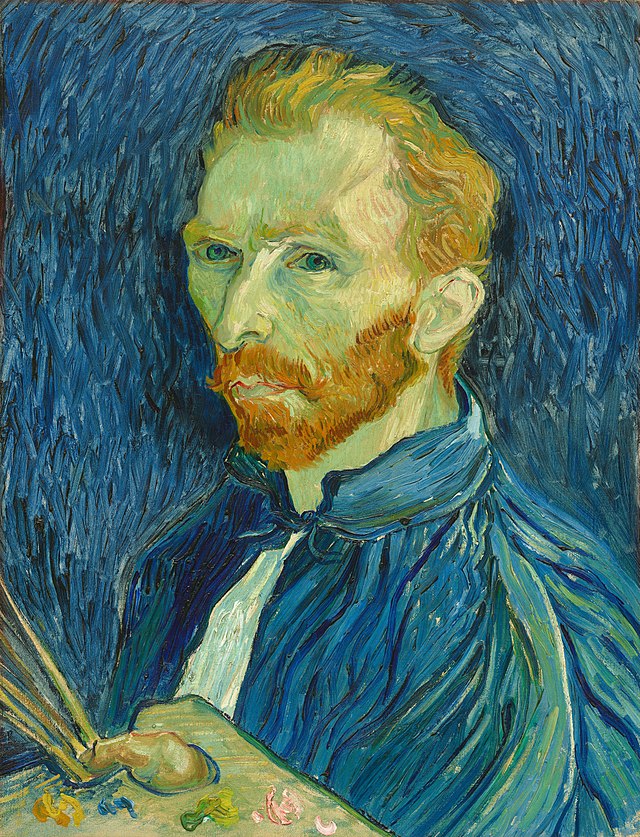
Van Gogh … The Original Grind?

Van Gohn was Grinding for over a decade

In the arts, consider Vincent van Gogh. He created over 2,000 artworks in just over a decade. That’s grinding out about 4 artworks per week!

Despite battling mental health issues, Van Gogh remained devoted to his craft. He lived for it, dedicated to the point of obsession. Today, we celebrate his masterpieces, but behind those works was a man who embodied ‘The Grind.’ He suffered in poverty and obscurity during his lifetime, but he never ceased to create.

Grinding out the words…

Let’s take a peek into the world of literature. Stephen King, one of the world’s most successful authors, stands as a perfect example. King faced repeated rejection. In fact, his first novel, Carrie, was rejected 30 times. But King did not give up. He continued to write, to grind, believing in his talent. Now, he’s one of the most prolific writers of our time, with over 60 novels to his name.

These stories, from different fields, all reveal the true meaning of ‘The Grind.’ They teach us that success is rarely a product of luck or talent alone. More often, it’s the result of dedication, hard work, resilience, and an unwavering belief in one’s ability. This is the essence of ‘The Grind.’

Each of us has a ‘grind’ to face in our lives. It could be acing an exam, raising children, building a business, or fighting for a cause. What’s important is to stay committed, even when the going gets tough.

In the words of Winston Churchill, “Success is not final, failure is not fatal: it is the courage to continue that counts.”

Therefore, I urge you to not only accept ‘The Grind’ but to love it. Embrace the process because it shapes you into a stronger, more resilient individual. Know your goal, chase it relentlessly, and don’t stop until you’ve achieved it.

So, I ask you again – Are you Grinding?

Leave a comment below … and prove it !

the “Myth” of Talent

I dislike the whole concept of “talent”. It assumes that some people have it and others do not. I believe that everyone is different and, for some people, “talent” may be buried or unseen for years or decades. Skill, on the other hand, is something that is always available for improvement. It is easy to see where you stand in terms of specific skills. On the other hand, the amount of “talent”, or even “potential talent” you have is difficult to determine precisely.

The fixed vs. growth mindset
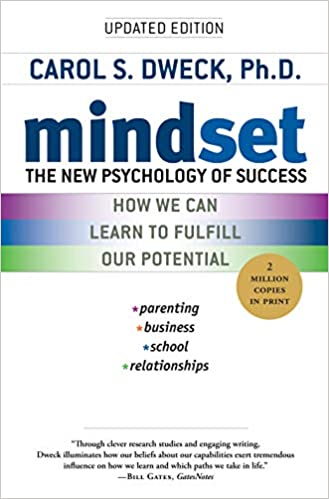
Let’s start by saying that I am a firm believer in the growth mindset. Psychologist Carol Dweck wrote a book that said individuals can possess either a fixed mindset or a growth mindset. Those with a fixed mindset believe that abilities are inherent, fixed traits that cannot be significantly developed. On the other hand, individuals with a growth mindset understand skills and abilities can be cultivated. You can grow your abilities through dedication, effort, and learning.

This mindset dichotomy has far-reaching implications for the perception of talent. Some argue that talent is an innate, predetermined quality that sets individuals apart. The concept of a growth mindset challenges this notion. By emphasizing the importance of continuous learning, practice, and resilience you can develop your skills to their full potential. By accepting a growth mindset, individuals can tap into their capacity for growth. This can unlock your true potential, blurring the lines between talent and skill.

The Skill Stack:

In the ongoing debate between skill and talent, one concept that challenges the conventional understanding is the “skill stack.” This is a term coined by the renowned cartoonist and author Scott Adams. The skill stack refers to the combination of various skills that an individual possesses. Rather than focusing solely on innate talent or singular expertise, the skill stack emphasizes the value of acquiring a diverse range of skills and leveraging them in unique ways.

According to Adams, the skill stack is like building a personal inventory of abilities that, when combined, create a unique advantage in the professional world. By developing a collection of skills, even if they are not individually exceptional, individuals can create a distinctive skill set that sets them apart from others. It’s a concept that challenges the notion that talent alone determines success and highlights the power of deliberate skill acquisition.

The skill stack approach opens up opportunities for individuals who may not possess a specific talent but are willing to invest time and effort into developing multiple complementary skills. Rather than relying on a single outstanding ability, individuals can tap into the potential of their skill stack, combining their strengths to tackle complex problems and adapt to changing environments. This perspective challenges the traditional belief that success is predetermined by talent, suggesting that the path to success lies in intentionally cultivating and combining a broad range of skills.

By embracing the skill stack mindset, individuals can actively pursue learning and acquiring new skills, constantly expanding their repertoire. This approach allows for continuous growth and adaptability, enabling individuals to navigate diverse challenges and seize opportunities in an ever-changing world. The skill stack concept shifts the focus from fixed abilities to the development of a versatile skill set, ultimately empowering individuals to create their own unique paths to success.

Talent is just the most visible part of your skill stack. It’s what is on top of the stack. It does not mean that you don’t have other, perhaps even more impressive, “talents” or undeveloped skills. It is just visible… now.

Talent is what you make of it
How old was Michael Jordan when he first dunked in a game? (see the video below) What if he never practiced after the first time? Would he have made it to the NBA? Would he win 6 NBA championships? Probably not.

You may see a glimpse of your talent early in your life. However, if it is not developed through hard work, learning your craft and attention to details, you will never achieve your highest potential.

In summary, the skill stack mentality challenges the myth of talent. By highlighting the acquisition and combination of diverse skills, you will be able to achieve your highest potential. Success is not solely determined by the abilities you were born with but rather by the deliberate cultivation of a varied skill set. By embracing the skill stack mentality approach, you can unlock your full potential, adapt to new circumstances, and carve out your own path to success in a dynamic and competitive world.

Mental Management – Start Training Your Brain

I just listened to a couple great podcasts about Mental Management (here are the links… Trail Runner Nation podcast and Brandon Webb’s podcast). Mental Management is a way to train your brain for high performance developed by Olympic Gold Medalist Lanny Bassham and if you have not read it yet you might want to read this previous post which includes an excerpt on Mental Management from Brandon Webb’s book “Red Circle”.

This is what I picked up
about Mental Management
from the podcasts…

There are three parts to our mental processes. They are the conscious, subconscious and the often overlooked self-image. The conscious is where we “think our thoughts”. The subconscious is where our skills are embedded (and much of our programming such as our values and beliefs are stored). The Self Image, according to Lanny Bassham, is often missed or overlooked.

A champion has a strong self image which means that they have confidence in their ability to perform at a high level during competition.

How do I build a strong self image?

At any moment, your self image is either becoming stronger or weaker based on the inputs that are received. Inputs might come from your conscious mind (the thoughts you think) or they may come from external sources such as family / friends / coaches or media. These inputs might say “You aren’t good enough.” or “You can do it.” but the key is which inputs are ACCEPTED! We have the ability to program our self image based on the thoughts that we accept and which ones we challenge.

Mental Management by Lanny Bassham

How Lanny lost the gold medal…

“Imagine the pressure that must be on him. Everyone expects him to win the gold medal. The only thing he can do is lose it.” This, or something similar, is what Lanny overheard from other competitors on the bus during his first olympics when he was coming in favored to win the gold medal.

What happened?

The conversation got “into his head” and Lanny had one of his worst performances in competition.  He ended up winning the silver medal, but it was a major disappointment for Lanny.

After those olympics in Munich Germany, Lanny spoke to psychologists to find out what went wrong. The response from psychologists of that time (1970’s) was that they felt they could definitely help him… learn to accept that winning the silver was good enough. Lanny wasn’t ready to accept silver so he reached out to gold medalists to find out how their thought processes worked so they could achieve at the highest levels.

With Winning In MindWhat he found out was what he turned into his Mental Management system and used to win the gold medal in the next Olympic games.

“The Mental Game isn’t just on Game Day. It is every day.” – Wendell Cherry, Hall of Fame Marksman

Building the Self Image of a Champion

Your Self Image keeps you in your Comfort Zone.  You need to re-program your self image through the things you say to yourself and the things that other people say which you accept as true.  Don’t defeat yourself.

You train your Self Image.

Draw a Charge … to Win!

First step… Watch this video and focus on how the players land after taking a charge…

Art of the Charge

Second step to Draw a Charge… Do it Safely
– “Catch the charge with your chest”… don’t expect the referees to give the charge call if it doesn’t LOOK like a charge. One way to make it “look right” is to catch the offensive player’s movement with your chest as opposed to your arms or legs (which would probably get called as a foul on the defender).
– When you watched the video, did you noticed that most players landed on their butts / backs, not their elbows or tailbone and certainly not their heads?Putting your hands out might lessen the impact of the fall but not everyone uses that technique because it is possible you might sprain a wrist or bruise your hand which could impact other aspects of your game such as shooting or dribbling.
– Critical to not bounce your head on the floor. Look up toward the player committing the charge. This will add a curve to your shoulders and back which can protect you head from impacting the floor and causing a serious injury.
– Part of safety is expecting the contact and knowing when it will happen. This leads into the content of the video which presented a number of real-game opportunities to draw a charge.

Situational Opportunities to Draw a Charge!
These are all presented in the video…
1. On Ball charge
2. Help side charge
3. Low post charge
4. Ball Screen charge
5. Transition charge
6. Gap charge
7. Out of bounds… Draw charge
8. Game Winning charge

The charge is a defensive tool and the more you know about how to draw a charge, the more successful your team will be. Review the situations presented in the video and see if you can recognize them in your games.

Be safe… and win!


How to Get Into Basketball Shape

First off, let me acknowledge a great idea and the inspiration for this article about getting into basketball shape…

The basketball mile (courtesy of PGC basketball). Basketball Shape article by PGC

The theory behind the “basketball mile” is to simulate all the running in a full game including the starts/stops, breaks between quarters and more. The reason I am featuring this drill is because it simulates a real game. It also gives you more rest time if you run each segment faster. It might not be an exact match for the running that is done in a game, but it is a pretty good approximation.

QUICK Bonus download for BWM readers…

Coach Wheeler has come up with a “timing sheet” that shows when each segment of this drill should start so you can simply run the game clock continuously and call out start times. The timing sheet also allows you to mark off which players complete each segment. You can even add information such as the winner of each segment. If you want you can record any violations (double dribble, travel or turnover) if you are incorporating a ball into the drill. It’s up to you if you want to add a penalty for mistakes (pushups?).

Click the links below to download the Timing Sheet (using “Save As”) that utilizes 20 second segments or 15 second segments …

[Timing sheet – 20 sec segments] Basketball Mile Drill Chart

[Timing sheet – 15 sec segments]

Ways to make it harder…

One of the key roles of a coach is to challenge the players on their team so they are given an opportunity to grow and improve. The basketball mile is already a pretty challenging drill but how can your team get more value out of doing it?

The PGC article (link here) suggests making the time for each sprint segment shorter (see the 15 second sheet for timing cues) and/or dribbling a ball while sprinting. I might add a few more “twists” to create challenges that will help you in a game.

First, add two free throws at the end and record who makes one or both of them. Free throws at the end of a game (when you are tired) can make the difference between winning and losing. Don’t waste the exhaustion that this drill provides. The timing sheets provide a line at the bottom to collect how each player did on their free throws.

Second, make it more competitive by recording who wins each sprint. Perhaps the player who wins the most sprints takes the last two foul shots for a team win (while individuals can shoot for their own “win”).

Thirdly, how will you start or introduce this drill? How about having two players race each other while the rest of the team watches? If you time them, you can ask the question to the team… is this pace fast enough for us to win our games?

Fourth, can you figure out a way to work in passing as part of the drill? Ideally players would have an opportunity to both dribble and pass based on whatever rules you come up with. Maybe players are paired up so that they pass the ball back and forth as they sprint the first leg and whoever ends up with the ball one step from half-court would have to dribble it back.

Finally, you could record the players who don’t finish the sprint in the time required. They can finish the rest of the sprints “at their leisure” or as additional conditioning work, but those who don’t meet the time targets could be marked on the recording sheet. Can you think of other scenarios? Leave your thoughts in the comments section below!

Final thoughts about How to get in Basketball Shape?

If you ask any basketball coach they would say that the sooner your players get in “basketball shape”, the sooner they will be ready to learn new skills and compete successfully on the court. The “Basketball Mile” is a great tool and there are plenty of ways that it can help your players get in Basketball Shape … the kind of shape that wins games!

Embrace The Grind.

Are you Grinding?

Do you even know what it means to Grind?

Lots of people talk about “The Grind” but what does it mean for you?

This is what will likely be a series about what it means to Grind and how you can do it better. I will start with this example. It is an excellent (basketball related) excerpt about “The Grind” from Coach John Calipari’s book, “Players First”…

Players First by John CalipariWeekends, holidays, just about every chance I got I was in the gym working on my game. I’d take shots from different parts of the floor, practice foul shots, work on my ball handling. I wrote down everything I did. I tell my guys now: “You’ve got to love the grind.” That’s something they probably hear from me more than anything else. You’ve got to love the grind. Embrace the work. Embrace the sweat. Embrace the pain.

And keep track of it all, because it keeps you honest. You’ve got to chart a workout and chart your shots. If there’s not something measurable, it’s not real. You say to yourself, I’m taking five hundred shots before I leave this gym, and I’m doing it every day. Count them up and write down how many you made.

Are you grinding towards your goal?

The Grind is about making progress.  It’s not always big steps. Sometimes the improvement is almost imperceptible it is so small. Sometimes you try something and it doesn’t work or, worse, it sets you back 5 steps. The Grind is about  wanting something enough that you are willing to keep persisting even when the going gets rough.

Here’s a quote and some explanation from an author, Ed Mylett, whose book, “One More”, I read this summer…

“It’s what you do when you aren’t motivated that determines success or failure.” – Ed Mylett

Ed explains … “Everyone has limits, and it’s natural for motivation to wane over time. When this happens, it’s crucial to examine your mindset. Being unmotivated happens to everyone; it’s an opportunity to look closely at when you need to power through and when you may need to step away to avoid burnout, overwhelm, or other health challenges. By balancing what absolutely must be done along with rest and relaxation time, you set yourself up for long term success.”

The Grind has 3 parts…

  1. Know what you want.
  2. Go after it.
  3. Don’t stop until you get it.

Where are you relative to your goal? Are you Grinding now so you will have success when it counts?  In basketball, the summer is the best time to Grind because your competition might be taking days off. They might be relaxing and thinking that since they were successful last season, they will be successful next season.

Nothing could be farther from the truth. The summer is the time when you pass your competition. You try new things. You work out and gain strength. You add skills. You take all aspects of your game to a new level.

Are you Grinding?

First to 60 – winning high school basketball games in NH

First to 60 high school basketballWhat does “First to 60” mean? A quick review of the winners and losers in NH high school basketball shows something interesting. The teams that win seem to be the ones that score more than 60 points in a game. Sure there are exceptions, especially in tightly contested games or defensive struggles, but as a general rule it seems to hold true. Could we do a statistical analysis and get specific number? Maybe. But even without seeing the actual games, it also makes sense (at least to me) that the first team to score 60 holds an advantage over their competition.

Deeper with “First to 60”

To start, by definition, if you are the first team to get to 60 points, you are also leading your competition which should be an indication that you have a good shot to win the game. On top of that, since most competitive (non-blowout) high school basketball games are in the 45-65 points range, if you get to 60 first the odds are that you are nearing the end of the game. Combining the last two points means that you are ahead going into the final minutes of the game… which is certainly better than the alternative, right?

What if you took the “First to 60” as your strategic approach?
How would it change your mindset and approach to the game?

It could shift your focus from the current score and put it on playing faster while looking for scoring opportunities. If you get down by 5 or even 10 points in the 1st quarter, not a big deal”. Down by 7 or 8 in the second quarter, still not a big deal, right?  The third quarter gets serious and you should start to see your runway to getting to 60. Granted, you want to be “First to 60″ so defense is as important as offense.

It helps you keep the big picture approach and not get distracted by a short run by your opponent. It is important to react to changes during the game but a big part of momentum is your mental outlook. If you expect to get to 60 points before your opponent, you react to their challenges without thinking that “the game is over”.

What do you think?

I am sure there are many coaches or experienced players who can give reasons why this is a great idea …. or the stupidest thing that any high school basketball team could ever do. I welcome your feedback, especially the questions and criticism because it makes us think better and develop strategies that are more powerful. Please leave a comment below with your thoughts on the “First to 60” approach. Did I miss something? I can’t wait to hear what you have to say. [Please be sure to include a bit about your background – coach? player? parent? referee? all of the above?- so we can better understand your perspective.]