How to GET Better Next Time

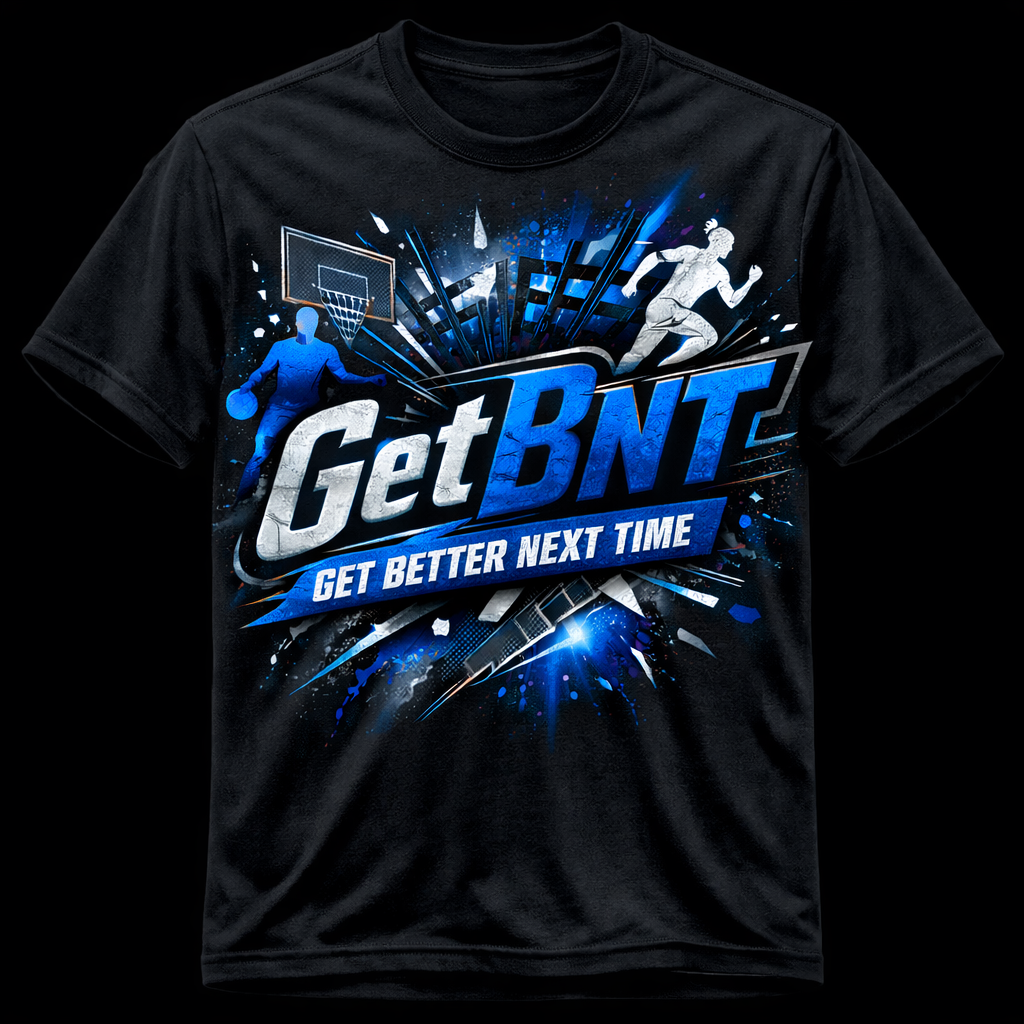
Get Better Next Time #GetBNT
Want a T-shirt with this logo?
Visit Coach Wheeler’s Shop

The most important list a coach can make.

Every season ends the same way for almost every team.

You either lose your last game… or you’re the one team cutting down the nets.

Either way, the locker room eventually goes quiet. The gym lights turn off. The season is over.

And that’s when the most important work of coaching begins.

Not recruiting.
Not new plays.
Not the summer schedule.

Reflection.

Some coaches avoid it. They move on quickly. They blame the officials, the injuries, the parents, the players, or the administration.

But the best coaches I’ve known do something very different.

They sit down and make a simple list:

Things I’ll Do Better Next Time.

Not things the players should do better.

Not things the parents should understand.

Things I will do better.

Because the truth is simple and uncomfortable:

The program is the coach.

If something isn’t working, the coach has to adjust first.


The Two Lists Every Coach Should Make

When I reflect on a season, I like to start with two columns.

  1. Keep
  2. Improve

The “Keep” column matters because we often forget what actually worked. A season might feel frustrating, but buried inside it are things worth building on.

Maybe your conditioning program worked.

Maybe your offense created good shots.

Maybe your players developed toughness.

Those things belong in the Keep column.

But the real growth happens in the Improve column.

This is where honesty lives.


Coaching Is a Learning Profession

Coaches love to talk about player development.

We track shooting percentages, rebounds, assists, turnovers, speed, strength, conditioning.

But how often do we track our own development as coaches?

Every season teaches lessons.

Sometimes those lessons are painful.

A missed opportunity.
A communication breakdown.
A system that players never fully understood.
A culture that didn’t grow the way we hoped.

The temptation is to move past it quickly.

The better choice is to study it.


Start With the Questions

If you want your “Next Season” list to be useful, start by asking better questions.

For example:

  • Did my players truly understand how we wanted to play?
  • Did our practices build the habits we expected in games?
  • Did players feel heard when they had concerns?
  • Did parents understand the direction of the program?
  • Did we spend practice time on the things that mattered most?

These questions are not about blame.

They are about clarity.

Because clarity leads to better coaching.


The Danger of Coaching on Autopilot

One of the biggest traps in coaching is running the same season over and over again.

Same drills.
Same approach.
Same mistakes.

Years go by, but nothing really improves.

The best coaches I’ve studied treat each season like an experiment.

They test ideas.

They refine systems.

They adjust communication.

They evolve.

And at the end of the season they ask:

What worked? What didn’t? What will I do differently next year?


The Power of Small Improvements

The interesting thing about these lists is that they rarely contain dramatic changes.

Usually they look something like this:

  • Communicate expectations earlier.
  • Write out practice plans more clearly.
  • Build in more end-of-game situations.
  • Give managers more responsibility.
  • Add a mental training component.
  • Ask players for feedback more often.

None of these ideas are revolutionary.

But together, they can transform a program.

Because improvement in coaching is rarely about one big change.

It’s about twenty small ones.


Coaching Is Leadership

Players are watching everything.

How you handle wins.
How you handle losses.
How you handle criticism.
How you respond when things go wrong.

When a coach takes responsibility and says:

“Here are the things I’ll do better next season.”

Players notice.

It sends a powerful message:

Improvement isn’t just expected from athletes.

It’s expected from everyone.


The Hidden Benefit of Reflection

There’s another reason this exercise matters.

Closure.

Every season carries emotion.

Frustration.
Pride.
Regret.
Moments you wish you could replay.

Writing down the lessons helps you process all of it.

It turns experience into knowledge.

And knowledge into progress.


Your Turn

If you’re a coach, here’s a challenge.
Take 15 minutes this week.

Grab a notebook and write the title:

“Things I’ll Do Better Next Season.”

Then make two lists.

1) Keep
2) Improve

Be honest.
Be specific.
Be constructive.

You might be surprised by what you discover.
Because every season—good or bad—is trying to teach you something.
And the coaches who keep getting better are the ones who stop long enough to listen.

Get Better Next Time #GetBNT
Want a T-shirt with this logo?
Visit Coach Wheeler’s Shop

The season may be over.

But the next one has already started.

The question is simple:

What will you do better next time?
Are you going to “Control The Controllables“?
The GRIND – Summer Basketball Edition

Time 2 GRINDSummer is when you can make huge improvements as a basketball player… especially if you grind. GRINDing is all about putting in the effort to get better.
Do you GRIND?

The GRIND is about overcoming obstacles. It is about staying motivated to execute your training plan. It is having a training plan in the first place. It is about the attitude that says “Nothing will stop me” and “I will do whatever needs to be done to achieve my goal(s)”.

Bottom line… if you are not part of TEAM GRIND, you will certainly lose to players who are out there grinding every day this summer.

How to start GRINDing

You might say to yourself… “I really like to be comfortable and kick back but I also want to accomplish great things so how do I become a grinder?” You probably recognize how important it is to put in the hours if you want to improve, but, honestly, there are some days when you REALLY don’t feel like it. What do I do?

(1) Imagine yourself as a GRINDER

Your self image determines the actions you will take and which ones you won’t. If you want to put in the effort, you need to see yourself as someone who GRINDS!

How do you change your self image? Here are some ideas…

GET THE T-Shirt. If you are wearing a t-shirt that proclaims you as someone who GRINDS, then people around you will see the shirt and expect you to put in the effort. Other people’s expectations (along with your own) can shape your self image so that you are more likely to build the characteristics of a GRINDER into your picture of who you are.

Use Your Words. The words we use when we talk to other people are important because they set the expectations other people then place on us. We need to be sure that we don’t put ourselves down by saying things like “I can’t GRIND like he can.”

These words, spoken to other people, are important but even more important are the words we use when we “talk to ourselves”. If you say the same statement to yourself, your subconscious mind accepts it as the truth and programs your self image to represent that “truth”. In other words, we hold ourselves back (or get better) by the words we use. Our subconscious mind and our self image (more about these in my article about Mental Management here), don’t care as much about what is “true” as much as what you believe is true, or what could be true.

What if we changed the statement to “I am not at the level of GRIND that he is YET but I am working on it.” Doesn’t that feel different? If you say it enough, you will begin to believe it. More about Affirmations here.

(2)  Make A Plan

If you lay out all the small steps that go into your long term plan for improvement, each one will be smaller and more likely to be accomplished. The truth is that the GRIND is about taking the one small step that is right in front of you. That’s the only thing you need to do. One step in front of the other. That’s how you run a marathon or become a lights-out shooter.

In addition, your plan will include milestones where you can start to see your progress. An example might be the first time you run a 5K (3.1 miles) without stopping to walk. Or it could be the first time you make 50% of your shots in a drill. Or 75%. Or 100%. You might not notice an improvement from one day to the next… but over a month or two, you will be able to look back on where you started and see how far you have come.

Your plan should also have a BHAG or Big Hairy Audacious Goal that is so BIG (and Hairy, whatever that means to you) that it will push you beyond your perceived limits. Want to dunk a basketball on the first day of tryouts next season? The time to GRIND is NOW! Do the workouts all Summer. Find new workouts to improve your vertical leap by searching YouTube.

(3) Partner up

If you can find someone with similar goals, you can help each other put in the work. There will be times when you won’t want to workout, but you can’t let down your team mate. This added accountability means that you will be less likely to miss a workout… and you will do the same for your team mate.

Don’t Let Me Down. Another way to boost your accountability is to announce your goals publicly. If your friends and team mates are anything like mine, they will constantly ask you how your plan to GRIND is coming… and maybe tease you a little bit if you don’t measure up. Go ahead and put your goals on Facebook. Or make an Instagram video explaining what you are going to do this summer.

Want to take it one step further?

Post a link to your Facebook “Declaration of GRIND” or Instagram video in the comment section below. Our readers (and Coach Wheeler) will definitely follow up to see how you are doing!

Summer will be over before you know it. Either you will get better or you will stay the same (which means you get worse compared to the competition who got better). Take control of your destiny and make a plan… and commit to the GRIND!

Will it be easy? Probably not.Will it be worth it? Definitely. Will you have to give up all the fun that happens in the Summer? Not necessarily. You can still go to the beach… and may go for a run before taking a dip in the cool water. You can still have fun while you GRIND. In fact, that is probably the best way to GRIND. Make it fun, involve others and at the end of the Summer you will be amazed by all the great experiences you have had as well as the improvements that will take your game to a whole new level for next season. Start the GRIND… now!

Affirmations for Athletes

Afffirmations 4 Athletes by Coach WheelerAffirmations are a powerful way for you, as an athlete, to overcome ways of thinking that are holding you back from becoming your best.  Society has programmed many “limiting beliefs” into your mind over your lifetime. If you have read my post about Mental Management, you will notice that affirmations are one way that you can use your Conscious Mind to program your Subconscious Mind and improve your Self Image.

You will also find that doing affirmations on a regular basis will improve your focus on positive outcomes or goals while pushing out thoughts about the obstacles / limiting factors / fear of the unknown you might be experiencing.

This article will define affirmations, show you how to build effective ones as well as provide some samples that you can use or adapt to your own situation.

What are affirmations?

Affirmations are statements that you write down and say on a regular basis, ideally every day, multiple times a day. Repetition is key. The more often you say the affirmation, the more likely it is to come true.

Affirmations Experience by Scott AdamsDon’t believe me?

It is good to be skeptical, especially when we are talking about changing how your brain is programmed. On the other hand, if there is something that will make your life better, don’t you deserve to learn about it? Here is the link to an article by the creator of the comic strip Dilbert, Scott Adams, that talks about why he thinks affirmations work. He also talks extensively about his experiences using affirmations in his book, “How to fail at almost everything and still win big“. Let’s assume that between what Coach Wheeler and Scott Adams have said, you want to learn more about how to use affirmations to improve your life.

How do I create effective affirmations?

The key to making affirmations that work is three-fold…

(1) Affirmations must be in the present tense. They might start with “I am…” They are built on the assumption that the goal or state of being that you desire is already happening. This is important since your mind will begin to believe whatever you say, especially if it is repeated enough. I am sure you have seen this happen to someone, maybe even yourself, where sticking to their story for so long that you believe it is true. Even if the person is delusional (i.e. disconnected from reality), their decision making is based on the “future reality” that they desire and believe. Because of this, their actions fall in line with that reality. The result? You create the reality that you believe.

(2) Don’t use negatives. Replace negative statements with something positive that overcomes the negative. For example, if you want to reduce the number of turnovers you commit in games, don’t use “I won’t turn over the ball.” Instead, focus on the positive condition that removes the negative, such as “I am an excellent passer.”

Belief comes from repetition(3) True or Not? A successful affirmation should represent what you want to be true, not necessarily what is already true. Some people have trouble imagining a different life where they enjoy an upgraded existence, especially if they are in the middle of some sort of crisis. When things are not going your way, that is exactly when you need to develop a vision for a better tomorrow. The easiest way to make that “better tomorrow” happen is to imagine how it will feel and consistently program your mind to believe it will happen. Affirmations are the perfect tool to use the power of words to start thinking differently about your situation. Once you think different, you will act different and things will change.

Sample Affirmations for Athletes:

Below are some examples that you can use or adapt to fit your own situation. These sample affirmations are geared toward somethings that athletes may find helpful. If you have additional ideas, please be sure to leave a comment below!

  • I make every open shot.
  • I control the game.
  • I make my team mates better.
  • I deliver the ball so my team mates can easily score.
  • I am in amazing shape and better conditioned than my competitors.
  • I am mentally tough. Nothing can stop me from achieving my goals.
  • I am a winner.
  • I constantly learn, grow and improve my game.
  • I perform well under pressure.
  • I am a good team mate.
  • I work hard and produce results. *
  • I can be trusted and never let down my team. *

* These last couple affirmations are more “character-related” (versus skill-related or outcome-oriented). For a downloadable Character Assessment Worksheet based on the work by Brett Ledbetter from “What Drives Winning”, check out the link to this article. [link coming soon]

Bottom Line:

Warning… Don’t compare your affirmations with what other people are doing. Your affirmations are specifically for YOU and YOU can be great! Don’t let anyone tell you that your aspirations and goals are “unrealistic”. Greatness, by definition, requires you go beyond ordinary to achieve the “extraordinary” !

This is what will happen as you start doing affirmations. You will begin to notice when you are in situations like the ones in your affirmations. This recognition along with the memory of what you have stated in your affirmation will move you toward achieving your affirmation. Will it happen immediately? Not likely… but it could. You might realize that you were closer to your affirmation than you imagined. If not now, when? In other words, how sure are you that it will it happen eventually? 100%. The sooner you start your affirmations, the sooner you will see results.