
Laid Off? Here’s What To Do When Your Career Suddenly Stops Working

How to Stabilize, Think Clearly, and Move Forward After Job Loss
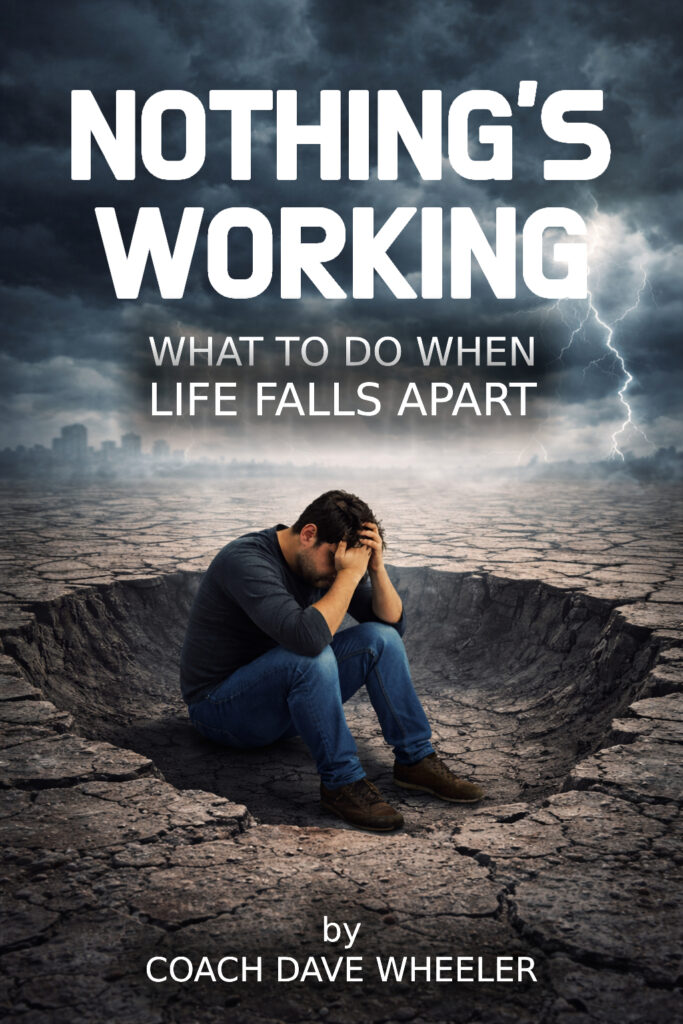
Does it feel like Nothing's Working since you were laid off?  Coach Wheeler's book will help you figure out What To Do !

You didn’t see it coming.

Or maybe you did — but you hoped it wouldn’t happen.

The meeting invite.
The quiet tone.
The conversation that changes everything.

Position eliminated.
Company restructuring.
Budget cuts.
Role no longer needed.

Just like that, your direction disappears.

If you were recently laid off, you may be feeling some combination of:

  • shock
  • anger
  • fear
  • embarrassment
  • confusion
  • exhaustion
  • uncertainty about what comes next

Let’s start here:

Your reaction is normal.
And this moment does not define your future.

But how you respond next will.


Why Job Loss Hits So Hard

Losing a job is not just a financial event.

It’s an identity disruption.

Your routine changes.
Your sense of contribution shifts.
Your structure disappears.
Your confidence takes a hit.

Your brain treats this as a threat.

That’s why you may notice:

  • racing thoughts
  • emotional swings
  • decision paralysis
  • loss of motivation
  • difficulty focusing

Nothing is “wrong” with you.

You are under pressure.

And pressure requires a different response than panic.


The Biggest Mistake People Make After Being Laid Off

Most people do one of two things:

They react emotionally
or
They freeze completely.

They rush decisions.
They spiral mentally.
They avoid reality.
They withdraw.

Both make the situation worse.

What you need first is stability — not speed.


What To Do Instead: The STAND Method

When everything feels uncertain, you don’t panic.

You S.T.A.N.D.

This framework helps people navigate hard seasons — including job loss — with clarity and control.


S — Stabilize First

Before updating your resume or applying for jobs, regulate your nervous system.

You cannot make good decisions while overwhelmed.

Try this:

  • take slow breaths (4 in, 6 out)
  • go for a walk
  • get sleep
  • talk with someone calm

Clarity follows stability.


T — Tell the Truth

Be honest about your situation without exaggeration.

Not:
“I’m ruined.”

But:
“My job ended. Now I choose my next direction.”

Truth reduces emotional distortion.


A — Adjust the Story

Job loss often creates a damaging narrative:

  • “I failed.”
  • “I’m behind.”
  • “No one will hire me.”

Replace the story:

  • This is a transition.
  • This is redirection.
  • This is a chance to reassess.

Your interpretation shapes your future.


N — Navigate Forward

Take small actions:

  • update LinkedIn
  • contact three people
  • research industries
  • learn one new skill

Momentum reduces fear.


D — Deliver Value

Even without a job, you can contribute.

Help someone.
Teach something.
Volunteer.
Create something useful.

Contribution restores confidence.


The Hidden Opportunity Inside Job Loss

You may not see it yet.

But layoffs often create:

  • clarity about what you actually want
  • motivation to grow
  • freedom to change direction
  • stronger resilience
  • better long-term decisions

Many people later describe their layoff as a turning point.

Not immediately.

But eventually.


What Companies Often Miss

Organizations focus on logistics after layoffs.

Severance packages.
Benefits.
Administrative steps.

But employees also need:

  • emotional stabilization
  • clear thinking tools
  • decision guidance
  • forward direction
  • confidence rebuilding

Without this support, fear spreads, morale drops, and recovery slows. Forward-thinking organizations are beginning to recognize this. Some now provide resilience and transition coaching to help employees move forward faster and healthier. Coach Wheeler is often brought in to give employees the skills and mindset to process the loss of a job and move onto the next part of their life.


A New Approach:
Hard Season Transition Sessions

Increasingly, companies are inviting top performance coaches such as Coach Wheeler to help employees navigate career disruption with clarity and structure.

These sessions typically help people:

  • stabilize emotionally
  • think clearly under pressure
  • make strategic career decisions
  • rebuild confidence
  • move forward faster

Because they can even be delivered remotely via Zoom, they require minimal time and cost while providing meaningful support.

It’s a simple way organizations can help people leave stronger than they arrived.

(If your organization is exploring support for recently laid-off employees, this type of session can make a significant difference.)


You Are Not Stuck — You Are In Transition

Right now may feel like collapse.
But it is more accurately reconstruction.

You are not starting over.
You are starting from experience.

And how you respond during this season will shape the opportunities ahead.


A Deeper Dive Is Coming

This article only scratches the surface.

My upcoming book:
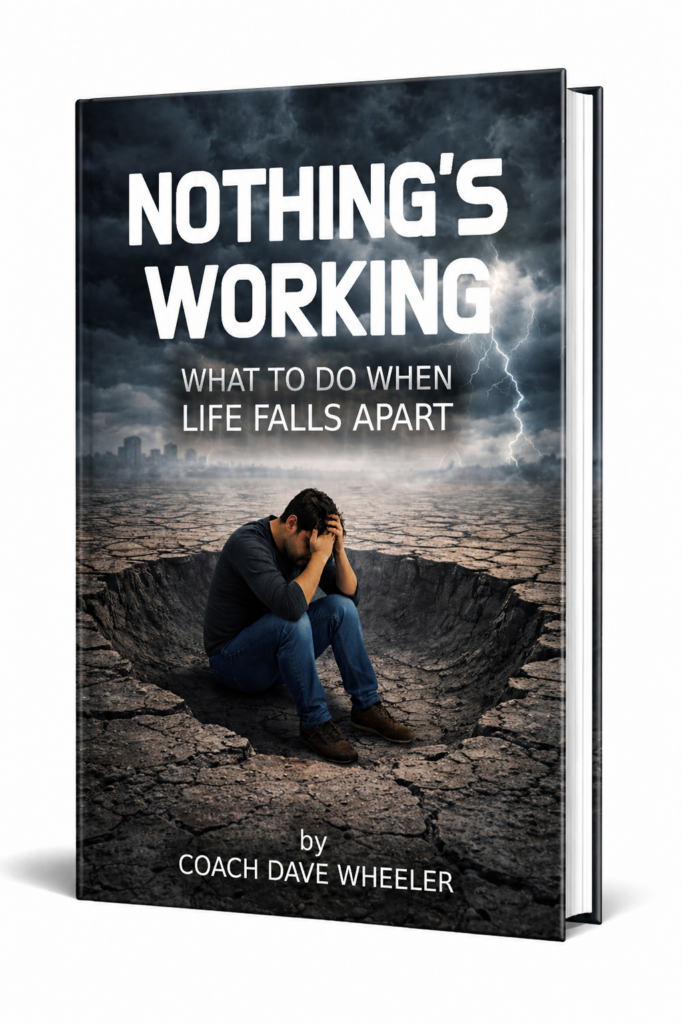
Laid off?  Find out What to do by downloading the Hard Season Survival Guide

Nothing’s Working: What to Do When Life Falls Apart

walks step-by-step through how to navigate difficult transitions like layoffs, career disruption, burnout, and major life change — using practical tools to stabilize, regain direction, and build strength.

If you want early access to many of the concepts in the book, along with a free toolkit to help you right now, download:

The Hard Season Survival Guide (Free PDF)
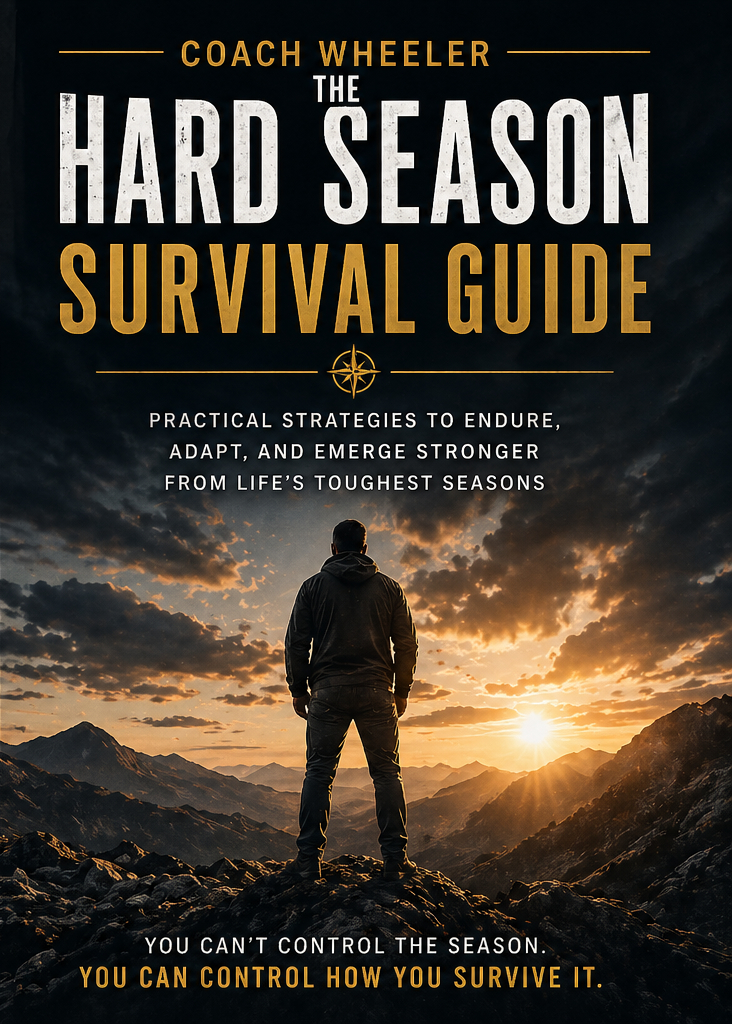
Laid off?  Find out What to do by downloading the Hard Season Survival Guide

Inside you’ll get:

  • The 5-Minute Reset Protocol
  • The STAND Method Quick Guide
  • Decision checklist for major life changes
  • Daily recovery routine
  • Clarity questions
  • Action planning worksheet

Sign up for the Download link here → The Hard Season Survival Guide


Your Next Move

You don’t need all the answers today.

You need the next step.

Stabilize.
Tell the truth.
Adjust the story.
Navigate forward.
Deliver value.

Hard seasons don’t end careers.

They often redirect them.

Let’s roll.
— Coach Wheeler

How to Deal With Losing: Turn Failure Into Your Next Win

Losing has a way of stopping time.

The moment stretches. The result sinks in. The air feels heavier. You replay what happened — what should have happened — and what could have happened if things had gone just a little differently.

You didn’t get the outcome you wanted. The opportunity slipped away. The effort didn’t produce the result you expected.

And if we’re honest about it…

Losing sucks.

That sharp discomfort, that sinking feeling in your chest, that frustration you can’t quite shake — it’s real. It’s personal. And it’s unavoidable if you care about doing something meaningful with your life.

Which raises a powerful question:

If losing didn’t bother you, would winning even matter?

Learning how to deal with losing is not just about feeling better. It’s about becoming better. Because the moment you don’t win is often the moment your future success is quietly decided.


Why Losing Feels So Personal

Failure cuts deep because it touches identity. You invested effort. You showed up. You tried. Somewhere inside, you believed things would work out differently.

When they don’t, the mind starts telling stories:

Maybe I’m not good enough.
Maybe this just isn’t for me.
Maybe I should stop trying.

But losing does not reveal your limits. It reveals your expectations. It exposes where your standards live. It highlights what you truly care about.

That discomfort is not weakness. It’s information.

Instead of asking why losing feels so bad, a more useful question emerges:

What does this reaction reveal about what I want most?

Your frustration points toward your ambition. Your disappointment reveals your direction. Your emotional response is data — and data can be used.


The Truth About Winning:
Everyone Loses First

If you want to understand how to handle failure in life, you must first accept an uncomfortable reality.

Everyone loses.

Not occasionally. Repeatedly.

Every person who achieves anything meaningful walks through rejection, setbacks, mistakes, and miscalculations. Success is rarely a straight line. It is a messy path shaped by correction and adjustment.

Losing is not the opposite of winning.

It is part of winning.

Growth requires friction. Progress requires feedback. Improvement requires something that didn’t work the first time.

Without mistakes, there is no adjustment.
Without setbacks, there is no resilience.
Without failure, there is no mastery.

The question is never whether you will lose.

The question is whether you will use the loss — or waste it.


The Moment That Defines Your Future

After every setback, something subtle happens. A fork appears in the road.

One path is familiar and comfortable. It protects the ego. It explains away the result. It blames circumstances, other people, bad timing, or unfair conditions. It lowers expectations and quietly encourages you to play smaller next time.

The other path is more demanding. It asks for ownership. It requires reflection. It demands growth and adjustment. It pushes you back into effort instead of retreat.

Most people decide their future in that moment.

How you react to losing determines if — and when — you will win.


How to Deal With Losing: The Three Decisions That Change Everything

Those who consistently bounce back from failure make three critical decisions immediately after a loss.

They separate results from identity.

A result is feedback, not a definition of who you are. Losing means something didn’t work — not that you don’t work. This simple distinction protects confidence while allowing improvement.

They extract the lesson quickly.

Instead of replaying the pain, they study the process. What worked? What didn’t? What caused the gap between expectation and outcome? What will change next time? Reflection transforms loss into education.

They act before motivation returns.

Most people wait until they feel ready again. High performers move while the disappointment is still fresh. Action rebuilds momentum. Momentum rebuilds confidence.

This is how resilience is built — not through inspiration, but through response.


The Hidden Advantage Inside Every Loss

There is something paradoxical about losing.

The very experiences we resist often create the strengths we later depend on.

Failure builds emotional control. It strengthens discipline. It develops humility. It sharpens strategy. It creates adaptability and persistence. These qualities cannot be learned through comfort.

People who never struggle rarely develop the capacity required for lasting success. Those who learn how to bounce back from failure gain an advantage that compounds over time.

So a new question becomes useful:

What strength is this loss trying to build in me?


The Question That Changes Everything

There is one question that transforms setbacks into fuel:

How can this help me win later?

Not “Why is this unfair?”
Not “Why did this happen to me?”
Not “Why am I unlucky?”

But:

How does this make me stronger?

That question shifts your focus from the past to the future, from blame to growth, from emotion to action.

It is the mindset that turns failure into success.


A Personal Standard for Moving Forward

Imagine adopting a simple rule for your life:

You don’t measure yourself by outcomes. You measure yourself by response.

You cannot control every result. But you can control preparation, effort, learning, persistence, and adjustment. Over time, these behaviors shape outcomes in your favor.

Winning becomes less about luck and more about consistency.


A Simple Process for Overcoming Setbacks

When you don’t win, pause and follow this process:

Allow yourself to feel the disappointment — but don’t stay there.
Separate your identity from the outcome.
Extract the lesson from what happened.
Adjust your strategy moving forward.
Take one immediate step toward improvement.
Try again quickly.

Repeated often enough, this cycle makes success inevitable.


When You Don’t Win

You will lose sometimes. Everyone does. But losing does not decide your future.

Your response does.

Learn faster. Adjust faster. Act faster.

And the moment you don’t win may become the moment everything begins to change.