Laid Off? Here’s What To Do When Your Career Suddenly Stops Working

How to Stabilize, Think Clearly, and Move Forward After Job Loss
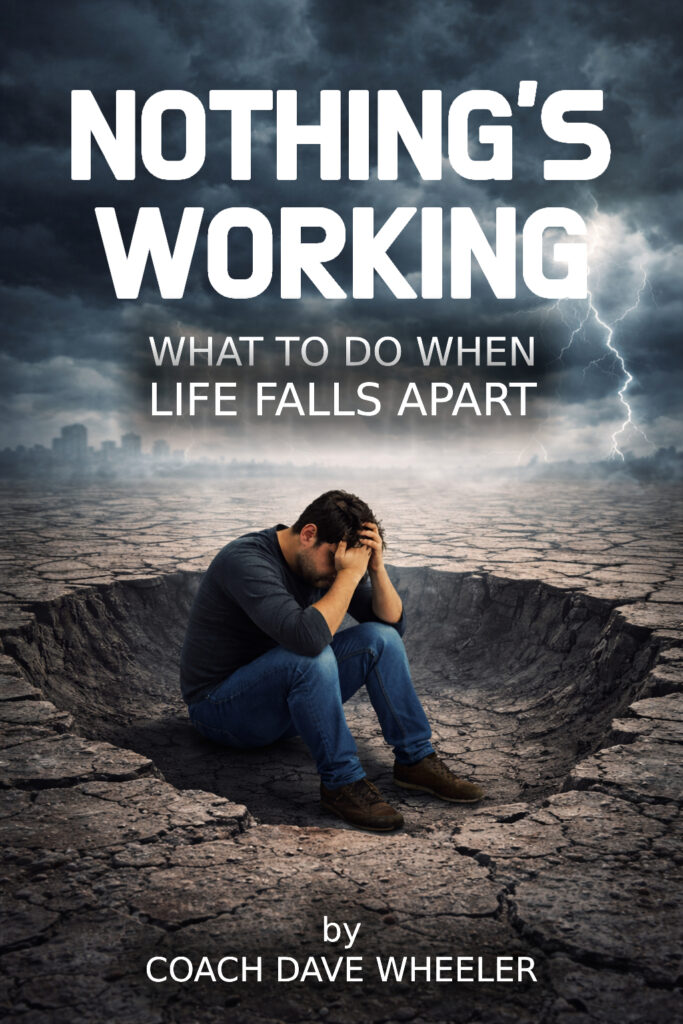
Does it feel like Nothing's Working since you were laid off?  Coach Wheeler's book will help you figure out What To Do !

You didn’t see it coming.

Or maybe you did — but you hoped it wouldn’t happen.

The meeting invite.
The quiet tone.
The conversation that changes everything.

Position eliminated.
Company restructuring.
Budget cuts.
Role no longer needed.

Just like that, your direction disappears.

If you were recently laid off, you may be feeling some combination of:

  • shock
  • anger
  • fear
  • embarrassment
  • confusion
  • exhaustion
  • uncertainty about what comes next

Let’s start here:

Your reaction is normal.
And this moment does not define your future.

But how you respond next will.


Why Job Loss Hits So Hard

Losing a job is not just a financial event.

It’s an identity disruption.

Your routine changes.
Your sense of contribution shifts.
Your structure disappears.
Your confidence takes a hit.

Your brain treats this as a threat.

That’s why you may notice:

  • racing thoughts
  • emotional swings
  • decision paralysis
  • loss of motivation
  • difficulty focusing

Nothing is “wrong” with you.

You are under pressure.

And pressure requires a different response than panic.


The Biggest Mistake People Make After Being Laid Off

Most people do one of two things:

They react emotionally
or
They freeze completely.

They rush decisions.
They spiral mentally.
They avoid reality.
They withdraw.

Both make the situation worse.

What you need first is stability — not speed.


What To Do Instead: The STAND Method

When everything feels uncertain, you don’t panic.

You S.T.A.N.D.

This framework helps people navigate hard seasons — including job loss — with clarity and control.


S — Stabilize First

Before updating your resume or applying for jobs, regulate your nervous system.

You cannot make good decisions while overwhelmed.

Try this:

  • take slow breaths (4 in, 6 out)
  • go for a walk
  • get sleep
  • talk with someone calm

Clarity follows stability.


T — Tell the Truth

Be honest about your situation without exaggeration.

Not:
“I’m ruined.”

But:
“My job ended. Now I choose my next direction.”

Truth reduces emotional distortion.


A — Adjust the Story

Job loss often creates a damaging narrative:

  • “I failed.”
  • “I’m behind.”
  • “No one will hire me.”

Replace the story:

  • This is a transition.
  • This is redirection.
  • This is a chance to reassess.

Your interpretation shapes your future.


N — Navigate Forward

Take small actions:

  • update LinkedIn
  • contact three people
  • research industries
  • learn one new skill

Momentum reduces fear.


D — Deliver Value

Even without a job, you can contribute.

Help someone.
Teach something.
Volunteer.
Create something useful.

Contribution restores confidence.


The Hidden Opportunity Inside Job Loss

You may not see it yet.

But layoffs often create:

  • clarity about what you actually want
  • motivation to grow
  • freedom to change direction
  • stronger resilience
  • better long-term decisions

Many people later describe their layoff as a turning point.

Not immediately.

But eventually.


What Companies Often Miss

Organizations focus on logistics after layoffs.

Severance packages.
Benefits.
Administrative steps.

But employees also need:

  • emotional stabilization
  • clear thinking tools
  • decision guidance
  • forward direction
  • confidence rebuilding

Without this support, fear spreads, morale drops, and recovery slows. Forward-thinking organizations are beginning to recognize this. Some now provide resilience and transition coaching to help employees move forward faster and healthier. Coach Wheeler is often brought in to give employees the skills and mindset to process the loss of a job and move onto the next part of their life.


A New Approach:
Hard Season Transition Sessions

Increasingly, companies are inviting top performance coaches such as Coach Wheeler to help employees navigate career disruption with clarity and structure.

These sessions typically help people:

  • stabilize emotionally
  • think clearly under pressure
  • make strategic career decisions
  • rebuild confidence
  • move forward faster

Because they can even be delivered remotely via Zoom, they require minimal time and cost while providing meaningful support.

It’s a simple way organizations can help people leave stronger than they arrived.

(If your organization is exploring support for recently laid-off employees, this type of session can make a significant difference.)


You Are Not Stuck — You Are In Transition

Right now may feel like collapse.
But it is more accurately reconstruction.

You are not starting over.
You are starting from experience.

And how you respond during this season will shape the opportunities ahead.


A Deeper Dive Is Coming

This article only scratches the surface.

My upcoming book:
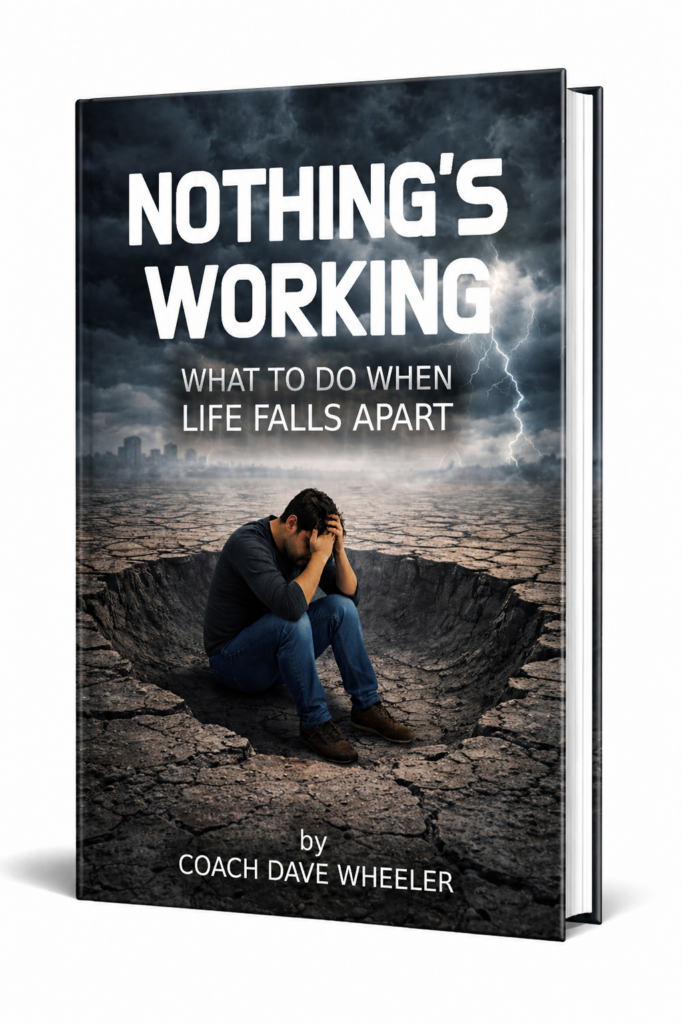
Laid off?  Find out What to do by downloading the Hard Season Survival Guide

Nothing’s Working: What to Do When Life Falls Apart

walks step-by-step through how to navigate difficult transitions like layoffs, career disruption, burnout, and major life change — using practical tools to stabilize, regain direction, and build strength.

If you want early access to many of the concepts in the book, along with a free toolkit to help you right now, download:

The Hard Season Survival Guide (Free PDF)
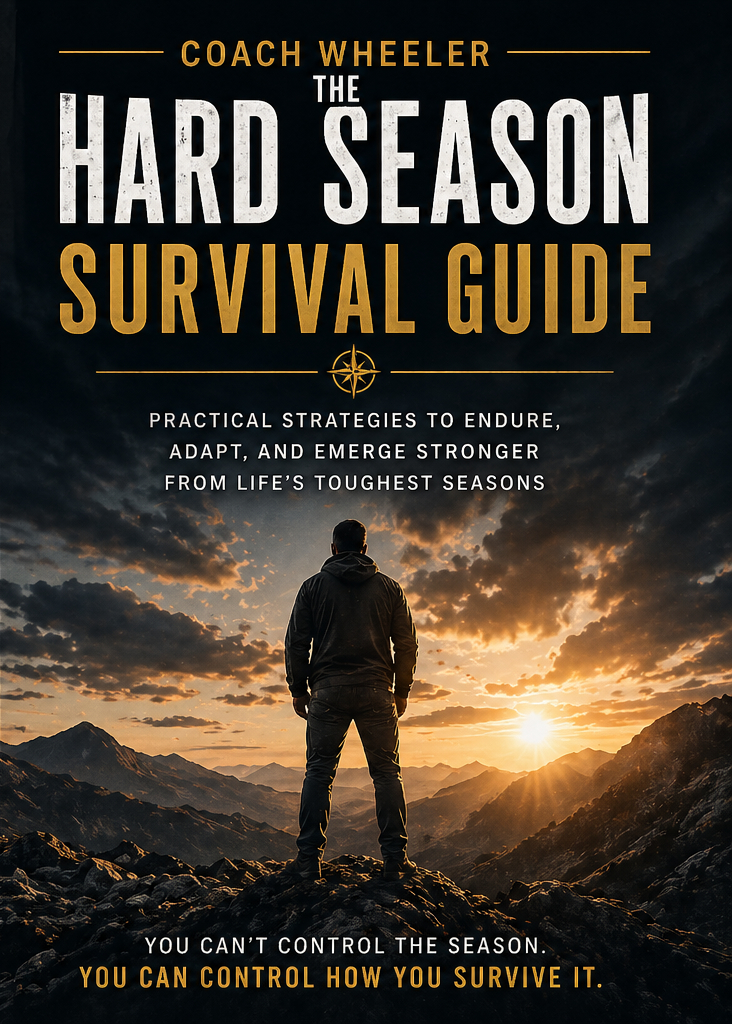
Laid off?  Find out What to do by downloading the Hard Season Survival Guide

Inside you’ll get:

  • The 5-Minute Reset Protocol
  • The STAND Method Quick Guide
  • Decision checklist for major life changes
  • Daily recovery routine
  • Clarity questions
  • Action planning worksheet

Sign up for the Download link here → The Hard Season Survival Guide


Your Next Move

You don’t need all the answers today.

You need the next step.

Stabilize.
Tell the truth.
Adjust the story.
Navigate forward.
Deliver value.

Hard seasons don’t end careers.

They often redirect them.

Let’s roll.
— Coach Wheeler

Winners vs. Whiners: The Path through Adversity

When it comes to Adversity, are you a winner or a whiner?

Success, as we’ve been taught, doesn’t come easy. There will be Adversity. But what separates the winners from the whiners? Is it talent, luck, or some magic formula? Or is it something deeper, something engrained in the core of their being?

Let’s tap into the wisdom of Coach Michael Burt, who often says, “Everybody needs a coach in life.” Burt’s philosophy emphasizes a “whole person theory,” aiming to tap into the body, mind, heart, and spirit of each player. But what does that have to do with our topic at hand? Well, the difference between winning and whining often boils down to your overall approach to life, encompassing all these facets.

Mindset: The Starting Line

Imagine this: The game is tied, seconds are ticking away, and you have the ball. At this moment, do you see an obstacle or an opportunity? Your mindset determines your actions.

As Burt articulates, “You can’t see the picture when you’re in the frame.” Sometimes you need an external perspective to guide you, to sharpen your mindset. This is where a coach comes into play, to help you see the game from angles you can’t perceive when you’re in the heat of the moment.

Ask Yourself: How can I adjust my mindset to be more aligned with that of a winner, and who can help guide me in that transformation?

Overcoming Adversity:

The Chicago Bulls vs. The Detroit Pistons
In the late ’80s and early ’90s, the NBA witnessed one of the most bitter rivalries: the Chicago Bulls versus the Detroit Pistons, also known as the “Bad Boys.” The Pistons were known for their physicality, often pushing the rules to the limits. The Chicago Bulls, led by Michael Jordan, initially couldn’t get past this obstacle. They were stuck, they were frustrated, and they were defeated. But did they whine about it? No. They evolved.

The Bulls took their failures as a challenge. They bulked up, they practiced harder, and Michael Jordan even worked on a more physical style of play. The result? They not only defeated the Pistons but went on to dominate the NBA.

Michael Jordan said, “Obstacles don’t have to stop you. If you run into a wall, don’t turn around and give up. Figure out how to climb it, go through it, or work around it.” This epitomizes the mindset of a winner.

Ask Yourself: What walls are you facing right now, and how can you overcome them instead of complaining?

Building Resilience in the Face of Adversity:
Body, Mind, Heart, and Spirit

This is where Coach Burt’s “whole person theory” becomes essential. To be resilient, to overcome, and to win, you need to be strong not just in body, but in mind, heart, and spirit.

  • Body: Physical preparation and conditioning.
  • Mind: Strategic and critical thinking.
  • Heart: Passion, drive, and motivation.
  • Spirit: Ethical grounding and a sense of purpose.

Michael Burt explains that the best competitors in the world have all these four components finely tuned. They aren’t just showing up on game day; they are preparing with a relentless focus on these four aspects.

Ask Yourself: Am I nurturing each of these areas in my life, or am I neglecting one over the others?

The Accountability Factor

Winners hold themselves accountable; whiners look for someone else to blame. If you’ve ever listened to a post-match interview of any great athlete, you’ll find them taking responsibility for their performance, good or bad.

“A good coach will make his players see what they can be rather than what they are,” Burt opines. Accountability starts with oneself but extends to the community around you—your team, your coach, your family, and your friends.

Ask Yourself: Who is holding me accountable, and more importantly, am I holding myself accountable? Am I taking Responsibility for my outcomes?

Final Word on Adversity?

The line between winning and whining is thinner than you think, but it’s a line that defines your character. It’s a line that speaks volumes about your preparation, your values, and ultimately, your success. So the next time you find yourself at a crossroads, caught between the urge to blame and the drive to overcome, remember: winners find a way; whiners find an excuse.

Ask Yourself: Which side of the line do you want to stand on?

Coach Wheeler, inspired by the philosophies of Coach Michael Burt, asks you to reflect, to challenge yourself, and to always strive for the winning side of life. Don’t let adversity get the better of you. Let it challenge you and reveal your best qualities. Because when you decide to be a winner, you’re not just affecting the score of the game; you’re defining your destiny.

Recommended Books for Further Reading on the topic of Adversity:


“Mindset: The New Psychology of Success” by Carol S. Dweck
A deep dive into the concept of “fixed” vs. “growth” mindsets, explaining why your outlook often determines your outcome.

“Grit: The Power of Passion and Perseverance” by Angela Duckworth
Learn why grit often predicts success more reliably than talent.

“Relentless: From Good to Great to Unstoppable” by Tim S. Grover
Written by Michael Jordan’s personal trainer, this book explores the mentality of top performers in any field.

“The Score Takes Care of Itself: My Philosophy of Leadership” by Bill Walsh
A look into the coaching philosophy of Bill Walsh, one of the most successful coaches in NFL history.

“You Win in the Locker Room First: The 7 C’s to Build a Winning Team in Business, Sports, and Life” by Jon Gordon and Mike Smith
The book explains how to build a successful team by focusing on culture and character.

“The Obstacle Is the Way: The Timeless Art of Turning Trials into Triumph” by Ryan Holiday
A modern take on Stoic philosophy that teaches how to turn obstacles into opportunities.

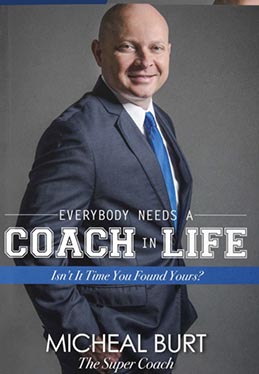
“Everybody Needs a Coach in Life: Isn’t It Time You Found Yours?” by Michael Burt
A comprehensive view into Coach Michael Burt’s philosophies on coaching and personal development.

“Coaching for Performance: GROWing Human Potential and Purpose” by John Whitmore
A foundational text for understanding performance coaching.

The Franchise: Building a Winner With the World Champion Detroit Pistons, Basketballs Bad Boys by Cameron Stauth
For those interested in the historic rivalry mentioned in the article.

“Leaders Eat Last: Why Some Teams Pull Together and Others Don’t” by Simon Sinek
This book explores how great leaders can create a circle of safety that promotes trust and meaningful work.

Mamba Mentality – a tribute to Kobe Bryant

Kobe Bryant coined the phrase, “Mamba Mentality” to describe his approach… to basketball, to competition, to life.

Mamba Mentality - tribute to Kobe BryantAs a life-long Celtics fan, it was hard for me to root for a Lakers player but you have to respect Kobe Bryant and his approach to the game of basketball. With his untimely passing, the time was right to take a look at how his mind worked and hopefully discover some of the secrets to his success.

I recently found the video below and it provides some of the best insights into how Kobe approached the game and his life. I’m not sure what else I can say except that it is well worth watching. If you want to be one of the best at something, this video will give you ideas that you can implement today. If you feel like you didn’t really know Kobe Bryant aside from his basketball career, this video provides glimpses into many other dimensions of the man.

I encourage you to watch this video and if you like it, please leave a comment below.

What did you think?
What can you learn from the Mamba Mentality?

Are you putting in the effort that is required to get what you SAY you want? Does your daily process and habits support your goals?

Do you have the Mamba Mentality? Are you serious about your game? Your life?