The Way of Winning: Identity First (Why You Don’t Rise to Your Goals)

Most people try to change their life by changing their actions.

Things like …

  • Workout plans.
  • Content schedules.
  • New goals.
  • New systems.

And it works… for a few days.

Then something breaks.

Not because the plan was wrong.

Because the identity never changed.


Xplain: Life Follows Identity

Here’s the truth most people miss:

You don’t rise to your goals.

You fall back to your identity.

If you see yourself as inconsistent… you’ll find a way to stop.
If you see yourself as “getting older”… you’ll slow down.
If you see yourself as “still figuring it out”… you’ll hesitate.

But if you see yourself as disciplined, focused, and dangerous in your pursuit?

Everything starts to organize around that.


The Olympic Thought Experiment

Let’s go back to the scenario.

You wake up tomorrow:

  • Out of shape
  • Slower
  • Softer
  • Off track

But in your mind…

You are still an elite-level athlete.

What happens?

You don’t panic.
You don’t scroll for a new program.
You don’t wait for motivation.

You train.

You clean up your nutrition.
You structure your day.
You eliminate distractions.

Not because you’re “trying to get back.”

Because that’s who you are.

That’s the difference.


Xample: The Silent Battle You’re Losing

Most people are fighting the wrong battle.

They’re trying to force behavior that doesn’t match their identity.

  • “I should work out” (but I don’t really see myself as an athlete)
  • “I should write more” (but I don’t really see myself as a writer)
  • “I should be more disciplined” (but I’ve always been inconsistent)

So every action feels heavy.

Every decision becomes a negotiation.

And negotiations drain energy.

Winners don’t negotiate with themselves all day.

They act in alignment with who they’ve decided to be.


The Edit That Changes Everything

There’s a concept I love:

Edit your life.

Not your intentions.
Not your goals.

Your life.

That means every day, every action runs through one filter:

Does this move me closer to who I am?

Not who you want to be.

Who you’ve already decided you are.

And once that’s clear, things get simple.

  • Junk input becomes obvious
  • Time-wasting disappears
  • Weak choices feel off
  • Strong choices feel automatic

You don’t need more discipline.

You need clarity and alignment.


Xchange: The Identity Build System

Let’s make this real.

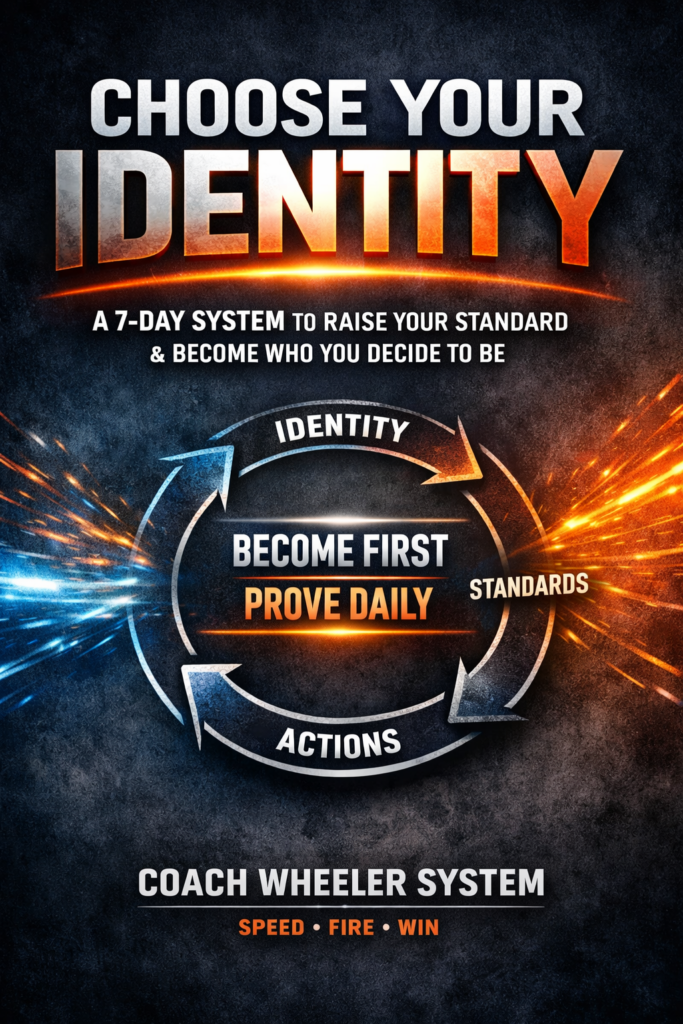
Here’s how you change identity in a way that actually sticks.


1. Decide Who You Are (Not Who You Hope to Be)

No soft language.

No “I’m trying to…”

You decide.

  • I am an endurance athlete training for an Ironman
  • I am a coach building a winning culture
  • I am a creator who publishes consistently
  • I am a disciplined operator

It should feel slightly uncomfortable.

That’s how you know it matters.


2. Set the Standard

Goals are optional.

Standards are not.

What does this person always do?

  • Trains on schedule
  • Fuels like a performer
  • Shows up early
  • Executes daily work
  • Tracks progress

Write these down.

These are your non-negotiables.


3. Remove What Doesn’t Fit

This is where most people fail.

They try to add new habits…

…without removing the old ones.

You can’t build a high-performance life on top of low-performance behaviors.

So cut:

  • Time leaks
  • Energy drains
  • Distractions
  • Weak environments
  • People or patterns that pull you off track

Editing is not optional.

It’s required.


4. Act Like That Person—Immediately

Not next week.
Not when you “feel ready.”

Now.

What would that version of you do today?

Do that.

Even if it’s small.

Especially if it’s small.

Because action creates evidence.

And evidence builds belief.


5. Stack Proof Daily

Identity is built through repetition.

Every action is a vote.

  • One workout = athlete
  • One post = creator
  • One disciplined decision = operator

You don’t need perfection.

You need consistency.

Stack enough proof… and doubt disappears.


The Real Advantage

Here’s where it gets interesting.

When your identity is strong…

You don’t fall apart when things go wrong.

You recover faster.

Because instead of saying:

“I blew it.”

You say:

“That’s not who I am.”

And you correct.

Immediately.


The Way of Winning

Winning doesn’t come from motivation.

It comes from identity.

You decide who you are.

You set the standard.

You remove what doesn’t belong.

You act in alignment.

You stack proof.

And over time…

There’s no gap left between who you are
and how you live.

Final Thought

You’re not as far away as you think.

The version of you that can do this…

already exists.

You don’t need to build them.

You need to step into them.

Then prove it.

How to GET Better Next Time

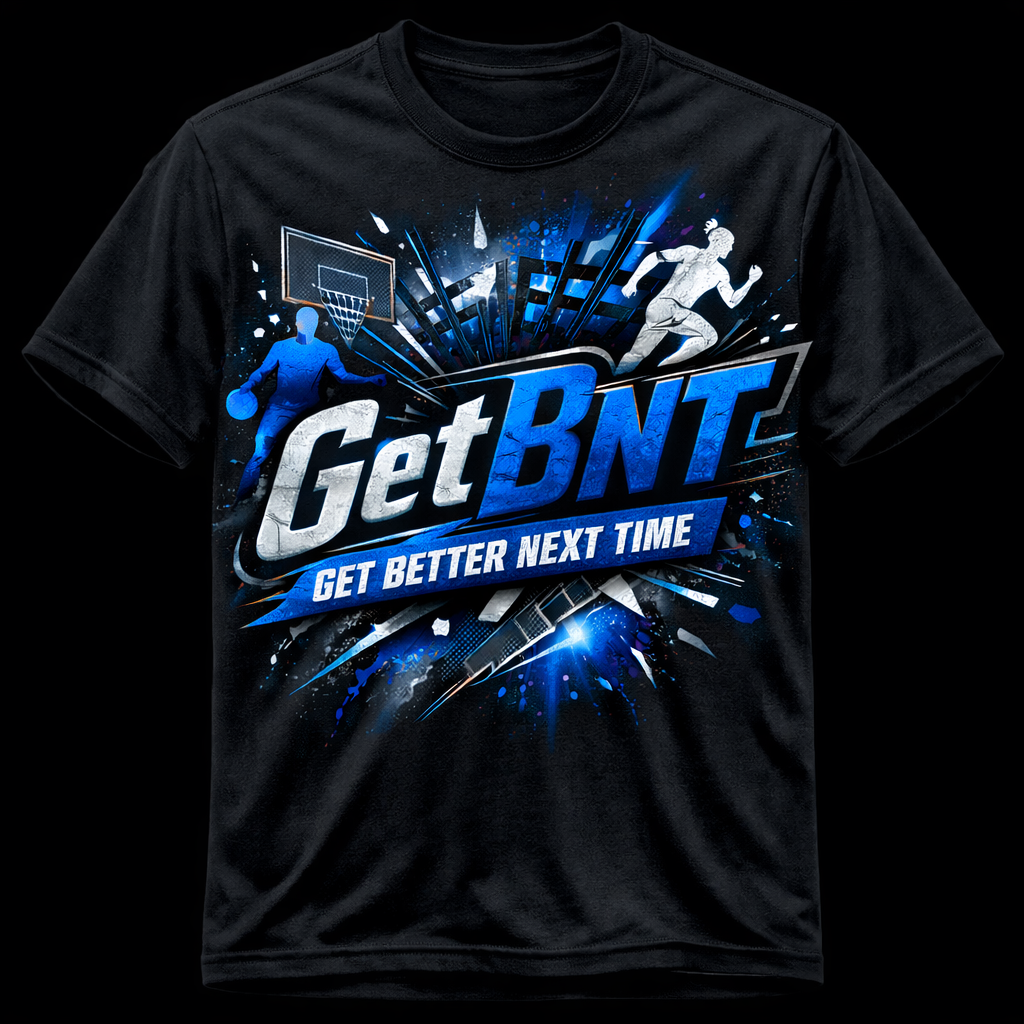
Get Better Next Time #GetBNT
Want a T-shirt with this logo?
Visit Coach Wheeler’s Shop

The most important list a coach can make.

Every season ends the same way for almost every team.

You either lose your last game… or you’re the one team cutting down the nets.

Either way, the locker room eventually goes quiet. The gym lights turn off. The season is over.

And that’s when the most important work of coaching begins.

Not recruiting.
Not new plays.
Not the summer schedule.

Reflection.

Some coaches avoid it. They move on quickly. They blame the officials, the injuries, the parents, the players, or the administration.

But the best coaches I’ve known do something very different.

They sit down and make a simple list:

Things I’ll Do Better Next Time.

Not things the players should do better.

Not things the parents should understand.

Things I will do better.

Because the truth is simple and uncomfortable:

The program is the coach.

If something isn’t working, the coach has to adjust first.


The Two Lists Every Coach Should Make

When I reflect on a season, I like to start with two columns.

  1. Keep
  2. Improve

The “Keep” column matters because we often forget what actually worked. A season might feel frustrating, but buried inside it are things worth building on.

Maybe your conditioning program worked.

Maybe your offense created good shots.

Maybe your players developed toughness.

Those things belong in the Keep column.

But the real growth happens in the Improve column.

This is where honesty lives.


Coaching Is a Learning Profession

Coaches love to talk about player development.

We track shooting percentages, rebounds, assists, turnovers, speed, strength, conditioning.

But how often do we track our own development as coaches?

Every season teaches lessons.

Sometimes those lessons are painful.

A missed opportunity.
A communication breakdown.
A system that players never fully understood.
A culture that didn’t grow the way we hoped.

The temptation is to move past it quickly.

The better choice is to study it.


Start With the Questions

If you want your “Next Season” list to be useful, start by asking better questions.

For example:

  • Did my players truly understand how we wanted to play?
  • Did our practices build the habits we expected in games?
  • Did players feel heard when they had concerns?
  • Did parents understand the direction of the program?
  • Did we spend practice time on the things that mattered most?

These questions are not about blame.

They are about clarity.

Because clarity leads to better coaching.


The Danger of Coaching on Autopilot

One of the biggest traps in coaching is running the same season over and over again.

Same drills.
Same approach.
Same mistakes.

Years go by, but nothing really improves.

The best coaches I’ve studied treat each season like an experiment.

They test ideas.

They refine systems.

They adjust communication.

They evolve.

And at the end of the season they ask:

What worked? What didn’t? What will I do differently next year?


The Power of Small Improvements

The interesting thing about these lists is that they rarely contain dramatic changes.

Usually they look something like this:

  • Communicate expectations earlier.
  • Write out practice plans more clearly.
  • Build in more end-of-game situations.
  • Give managers more responsibility.
  • Add a mental training component.
  • Ask players for feedback more often.

None of these ideas are revolutionary.

But together, they can transform a program.

Because improvement in coaching is rarely about one big change.

It’s about twenty small ones.


Coaching Is Leadership

Players are watching everything.

How you handle wins.
How you handle losses.
How you handle criticism.
How you respond when things go wrong.

When a coach takes responsibility and says:

“Here are the things I’ll do better next season.”

Players notice.

It sends a powerful message:

Improvement isn’t just expected from athletes.

It’s expected from everyone.


The Hidden Benefit of Reflection

There’s another reason this exercise matters.

Closure.

Every season carries emotion.

Frustration.
Pride.
Regret.
Moments you wish you could replay.

Writing down the lessons helps you process all of it.

It turns experience into knowledge.

And knowledge into progress.


Your Turn

If you’re a coach, here’s a challenge.
Take 15 minutes this week.

Grab a notebook and write the title:

“Things I’ll Do Better Next Season.”

Then make two lists.

1) Keep
2) Improve

Be honest.
Be specific.
Be constructive.

You might be surprised by what you discover.
Because every season—good or bad—is trying to teach you something.
And the coaches who keep getting better are the ones who stop long enough to listen.

Get Better Next Time #GetBNT
Want a T-shirt with this logo?
Visit Coach Wheeler’s Shop

The season may be over.

But the next one has already started.

The question is simple:

What will you do better next time?
Are you going to “Control The Controllables“?

Coach Wheeler’s Challenge Philosophy: 104 Basketball Practice Challenges That Build Winning Teams

Basketball Challenge Practice Intensity Drill

Stop running drills. Start demanding proof. Walk into most gyms and you’ll see good work. Lines are tight. Drills are organized. Coaches are talking. And then the game hits… and it disappears. I’ve lived that. So I made a shift—not in plays, not in schemes… In how we train. It is called “basketball practice challenges”


XPLAIN: What This Really Is

A drill tells players what to do. A challenge asks:

“Can you prove it… right now… when it matters?”

That’s the difference.

  • Drills create activity
  • Challenges create accountability
  • Drills build comfort
  • Challenges build capacity
  • Drills look good
  • Challenges translate

If it’s not tested, measured, and proven…

It’s just talk.


What Happens When You Flip the Switch

The moment you introduce real challenges, your gym changes.

Effort becomes visible

No guessing. It’s timed. It’s scored.

Focus sharpens

Standards replace speeches.

Accountability shows up

The board tells the truth.

Confidence gets earned

Not hype—proof under pressure.


XAMPLE: Same Drill. Different Team.

Full-court sprints.

Old way: “Run 10.”

Challenge way: “10 sprints. Every rep under 6 seconds. Miss one—we restart.”

Now:

  • Teammates hold each other accountable
  • Standards get protected
  • Nobody hides

Same drill. Different identity.


Why You Need This

Games don’t care what you practiced. They ask:

  • Can you execute when tired?
  • Can you think when it’s chaotic?
  • Can you respond after a mistake?
  • Can you win when it’s uncomfortable?

If your practices don’t ask those questions… The game will.


🔄 XCHANGE: How We Build It Through the Season

This isn’t random. It’s layered.


Early Season — Build the Engine

Physical Challenges

We go heavy here:

  • Timed sprint standards
  • Rebounding battles
  • Shooting volume competitions

Example:

“1-minute layup challenge—team must hit 25 or we reset.”

You’re building capacity.


Mid-Season — Lock the Mind

Mental Challenges

Now we stress focus:

  • Pressure free throws (with consequences)
  • Silent scrimmages
  • “Next play” response challenges

Example:

“Miss 2 free throws as a team—everyone runs.”

You’re building discipline.


Late Season — Win the Moment

Game Situation Challenges

Now it’s real:

  • Down 3, 30 seconds
  • Up 2, need a stop
  • BLOB/SLOB execution

Example:

“You’re down 2. 18 seconds. No timeout. Solve it.”

You’re building execution.


All Season — Control What Matters

Control Challenges

Daily identity work:

  • Sprint to huddle
  • No negative body language
  • Talk every possession

Example:

“Zero hands on hips all practice—or we redo the last drill.”

You’re building culture.


⚙️ How I Run It

Simple. Every practice:

At least one challenge… Physical, Mental and Game or Control

usually less than 10–15 minutes.

Track it. Post it. Name winners.


Get the Full System (104 Challenges)

What you just read is the philosophy.

But philosophy without structure… fades.

That’s why I built:

The Coach Wheeler Challenge Philosophy eBook: with 104 Challenges

Inside, you get:

All 4 Categories Fully Built Out:

  • 26 Physical Challenges (timed, competitive, measurable)
  • 26 Mental Challenges (focus, discipline, response)
  • 26 Game Situation Challenges (real-game execution)
  • 26 Control Challenges (effort, energy, culture)

Real Examples You Can Run Tomorrow:

  • “Win the Drill Twice” (consistency pressure)
  • “3 Stops in a Row” (defensive identity)
  • “Clutch Free Throw Ladder” (pressure shooting)
  • “No Walk Practice” (effort standard)
  • “Down 3, 30 Seconds” (game reality)

Each one is designed to:

  • Be simple to implement
  • Create immediate buy-in
  • Produce visible results

Final Thought

You don’t need more drills. You need more proof.

Because at some point, your team will face a moment where:

  • It’s tight
  • It’s loud
  • It’s uncomfortable

And they won’t rise to what you said. They’ll fall back on what they’ve proven.


“Did we prove it today?”

If you want that answer to be yes

👉 Grab the Challenge Philosophy eBook including 104 Challenges for Highly Competitive Basketball Teams (the link will be added here when it is released or you can simply sign up for Coach Wheeler’s email list) and start building a team that doesn’t hope to win— They expect to.


And here’s where it gets even better…

These 104 challenges are also being turned into two card decks:

  • One for Physical + Game challenges
  • One for Mental + Control challenges

So you can literally pull a challenge and run it on the spot.

Plus:

  • Practice integration system
  • Tracking ideas
  • Seasonal progression plan

Greatness On Demand (G.O.D.): The Mindset That Wins in Pressure Moments

And, guess what, the “Moment” Doesn’t Care If You’re Ready

There’s a moment in every game, every meeting, every life.

The score is tight. The clock is low. The pressure is real.

And nobody asks:

“Hey… are you feeling confident today?”

No.

The moment arrives anyway.

And in that instant, there are only two types of people:

  • Those who hope they’ll be ready
  • Those who have trained for Greatness On Demand

What Is G.O.D.?

G.O.D. = Greatness On Demand

Is your Greatness On Demand?
Do you have Greatness On Demand?

It’s not talent.
It’s not hype.
It’s not a lucky streak.

It’s the ability to access your best—on command—when it matters most.

Not someday.
Not when you feel like it.
Not when conditions are perfect.

Right now. Under pressure. With everything on the line.


The Lie Most People Believe

Most people believe in what I call “Someday Greatness.”

  • “I’ll be great when I’m ready.”
  • “I’ll perform when I feel confident.”
  • “I’ll step up when the time is right.”

That’s a fantasy.

Because the truth is:

The moment doesn’t wait for your confidence.

It demands your performance.

O.M.G. [Own My Greatness] moments

You’ve felt them.

OMG... Owning My Greatness!
OMG… Owning My Greatness!
  • Game-winning free throws
  • Final possession
  • Big presentation
  • Opportunity that shows up unexpectedly

That’s an OMG moment.

Everything speeds up.
Your heart jumps.
Your brain starts talking.

And most people… hesitate.


The Shift

Winners don’t panic at OMG moments.

They recognize them.

They’ve seen them before.

They’ve trained for them.

So instead of fear, they think:

“This is it.”

And then they activate:

G.O.D. – Greatness On Demand


The Sequence of a Winner

There’s a pattern here if you look closely:

OMG — The moment appears
GOD — You deliver
WOW — The world reacts

That’s the cycle of greatness.


How Do You Build G.O.D.?

Greatness On Demand isn’t magic.

It’s trained.

Here’s how.


1. You Stop Negotiating With Yourself

Most people hesitate.

Winners decide faster.

They don’t ask:

  • “Should I go hard today?”
  • “Do I feel like it?”

They move.

Action creates traction.


2. You Practice Under Pressure

Easy reps don’t prepare you.

You need:

  • time pressure
  • fatigue
  • consequences

Because when your body is tired…

your habits take over.


3. You Build Default Behaviors

When things get intense, you don’t rise to the level of your goals…

You fall to the level of your systems.

G.O.D. people build systems like:

  • sprint back on defense
  • shoot with confidence
  • speak clearly under pressure
  • act immediately

4. You Learn to Love the Moment

Most people fear pressure.

Winners recognize it.

They think:

“This is where I separate myself.”


A Simple Test

Ask yourself:

When the moment comes… do you want it?

Or do you avoid it?

Because G.O.D. isn’t just about ability.

It’s about ownership.


What G.O.D. Looks Like in Real Life

  • The player smiling at the free throw line
  • The entrepreneur hitting “publish” before it’s perfect
  • The coach making the bold call
  • The speaker stepping forward instead of shrinking back

No hesitation.

No delay.

Just:

Go.


Why This Concept Hits Different

Because deep down, everyone knows:

They’ve had moments…
…and didn’t step into them.

That feeling sticks.

G.O.D. is the opposite of that.

It’s the identity of someone who says:

“Next time… I’m ready.”


The Shirt Isn’t Just a Shirt

When you see it:

It’s not decoration.

It’s a reminder.

A signal.

A standard.

To yourself… and to everyone around you.

Imagine This

You walk into the gym.

Black shirt. Bold letters: G.O.D.

No explanation needed. Someone reads it. They get it instantly.

They know:

This person came to perform.

And When You Walk Away…

They see the back.

Now it’s not just a shirt.

It’s a system.

Final Thought

You don’t get to choose when the moment comes.

But you do get to choose how you prepare.

So the real question is:

When your next OMG moment hits…

will you hope you’re ready?

Or will you deliver

Greatness On Demand?

Escaping the Prison of Habits: How to Break Free From Your Comfort Zone

The Door Was Never Locked

Are you living in your own prison of habits?

Some prisons are made of steel bars and concrete.
Others are made of habits.

Some prisons are guarded by men with keys.
Others are guarded by fear, routine, and comfort.

And the strange thing about the second kind of prison is this:

The person holding the key…
is usually the one inside the cell.


The Prison of Habits

Habits are powerful.
They are efficient.
They help us survive.

When you learn to brush your teeth, drive a car, or tie your shoes, your brain builds neural shortcuts so you don’t have to think about it every time.

That’s a good thing.

But those same neural shortcuts can quietly turn into chains.

You wake up at the same time.
Drive the same roads.
Eat the same meals.
Think the same thoughts.
Believe the same beliefs.

And one day you look up and realize something unsettling.

You are living the same day… over and over again. As highlighted in Atomic Habits, small repeated behaviors shape identity over time.

Not because you chose it.

Because you stopped choosing.


The Comfort Zone Cell

The comfort zone is the most luxurious prison ever built.

It has soft beds.

Predictable meals.

No surprises.

No risk.

No embarrassment.

No failure.

But there is also no growth.

No discovery.

No adventure.

No transformation.

The comfort zone whispers to you every day:

“Stay here.
It’s safe.”

And it’s telling the truth.

But safety and aliveness are not the same thing.

This is where most people stop growing, even though building a winning mindset can completely change their trajectory.


My Cell

Imagine someone saying:
“I’ve been in this cell for over 60 years.”

It sounds tragic.

Until we realize something uncomfortable. Most people live their entire lives inside invisible cells.

Cells built from sentences like:

  • “I’m too old.”
  • “That’s just how I am.”
  • “It’s too late now.”
  • “I’ve always done it this way.”
  • “People like me don’t do that.”

Brick by brick.
Thought by thought.
Year by year.
Until the walls feel permanent.


The Moment of Realization

One day you walk up to the door.
You push.
And something surprising happens.
The door moves.
Not much. Just a little. Enough to realize…

It was never locked.


Why We Stay

If the door is open, why do so many people stay inside?

Because leaving the cell means facing things the cell protects us from.

  • Uncertainty
  • Failure
  • Judgment
  • Embarrassment
  • Change

Inside the prison, we know exactly who we are.

Outside the prison…

We might become someone else.

And that is both terrifying and exciting.


Why You Should Get Out

Here is the truth few people say out loud: The purpose of life is not comfort.

It is expansion.

Every great experience in life exists outside the cell. Learning something new. Meeting someone unexpected. Starting a project. Taking a risk. Discovering a strength you didn’t know you had.

The world outside the prison is messy, unpredictable, and sometimes painful.

But it is also where life actually happens.


The First Step Out

Escaping the prison of habit does not require a dramatic breakout.

You don’t need dynamite. You don’t need a master plan.

You only need one small act of rebellion.

Take a different road. Start the project. Ask the question. Sign up for the thing.

Send the email. Take the walk. Open the door one inch wider.

That’s it.

Freedom begins with one inch.


A Strange Thing Happens

When you step outside your cell, you start noticing something.

There are millions of other people wandering around.

Some escaped yesterday.

Some escaped twenty years ago.

Some are still standing just outside the door, amazed they made it.

And many of them will say the same thing:

“I wish I had done this sooner.”


The Real Question

At this point, the real question is not:

“How do I get out?”

You already know.

The real question is:

“What kind of life is waiting for me outside the cell?”

And there is only one way to find out.

Push the door.

Step out.

Take one step.

Then another.


The Final Truth

You were never meant to live in a prison of habits.

You were meant to explore, build, learn, love, and grow.

The cell may feel familiar.

But the world outside the door is infinite.

And the key has been in your pocket…

the whole time.


So the real question is this:

Are you staying your prison of habits…

or are you finally walking out?

How to Deal With Losing: Turn Failure Into Your Next Win

Losing has a way of stopping time.

The moment stretches. The result sinks in. The air feels heavier. You replay what happened — what should have happened — and what could have happened if things had gone just a little differently.

You didn’t get the outcome you wanted. The opportunity slipped away. The effort didn’t produce the result you expected.

And if we’re honest about it…

Losing sucks.

That sharp discomfort, that sinking feeling in your chest, that frustration you can’t quite shake — it’s real. It’s personal. And it’s unavoidable if you care about doing something meaningful with your life.

Which raises a powerful question:

If losing didn’t bother you, would winning even matter?

Learning how to deal with losing is not just about feeling better. It’s about becoming better. Because the moment you don’t win is often the moment your future success is quietly decided.


Why Losing Feels So Personal

Failure cuts deep because it touches identity. You invested effort. You showed up. You tried. Somewhere inside, you believed things would work out differently.

When they don’t, the mind starts telling stories:

Maybe I’m not good enough.
Maybe this just isn’t for me.
Maybe I should stop trying.

But losing does not reveal your limits. It reveals your expectations. It exposes where your standards live. It highlights what you truly care about.

That discomfort is not weakness. It’s information.

Instead of asking why losing feels so bad, a more useful question emerges:

What does this reaction reveal about what I want most?

Your frustration points toward your ambition. Your disappointment reveals your direction. Your emotional response is data — and data can be used.


The Truth About Winning:
Everyone Loses First

If you want to understand how to handle failure in life, you must first accept an uncomfortable reality.

Everyone loses.

Not occasionally. Repeatedly.

Every person who achieves anything meaningful walks through rejection, setbacks, mistakes, and miscalculations. Success is rarely a straight line. It is a messy path shaped by correction and adjustment.

Losing is not the opposite of winning.

It is part of winning.

Growth requires friction. Progress requires feedback. Improvement requires something that didn’t work the first time.

Without mistakes, there is no adjustment.
Without setbacks, there is no resilience.
Without failure, there is no mastery.

The question is never whether you will lose.

The question is whether you will use the loss — or waste it.


The Moment That Defines Your Future

After every setback, something subtle happens. A fork appears in the road.

One path is familiar and comfortable. It protects the ego. It explains away the result. It blames circumstances, other people, bad timing, or unfair conditions. It lowers expectations and quietly encourages you to play smaller next time.

The other path is more demanding. It asks for ownership. It requires reflection. It demands growth and adjustment. It pushes you back into effort instead of retreat.

Most people decide their future in that moment.

How you react to losing determines if — and when — you will win.


How to Deal With Losing: The Three Decisions That Change Everything

Those who consistently bounce back from failure make three critical decisions immediately after a loss.

They separate results from identity.

A result is feedback, not a definition of who you are. Losing means something didn’t work — not that you don’t work. This simple distinction protects confidence while allowing improvement.

They extract the lesson quickly.

Instead of replaying the pain, they study the process. What worked? What didn’t? What caused the gap between expectation and outcome? What will change next time? Reflection transforms loss into education.

They act before motivation returns.

Most people wait until they feel ready again. High performers move while the disappointment is still fresh. Action rebuilds momentum. Momentum rebuilds confidence.

This is how resilience is built — not through inspiration, but through response.


The Hidden Advantage Inside Every Loss

There is something paradoxical about losing.

The very experiences we resist often create the strengths we later depend on.

Failure builds emotional control. It strengthens discipline. It develops humility. It sharpens strategy. It creates adaptability and persistence. These qualities cannot be learned through comfort.

People who never struggle rarely develop the capacity required for lasting success. Those who learn how to bounce back from failure gain an advantage that compounds over time.

So a new question becomes useful:

What strength is this loss trying to build in me?


The Question That Changes Everything

There is one question that transforms setbacks into fuel:

How can this help me win later?

Not “Why is this unfair?”
Not “Why did this happen to me?”
Not “Why am I unlucky?”

But:

How does this make me stronger?

That question shifts your focus from the past to the future, from blame to growth, from emotion to action.

It is the mindset that turns failure into success.


A Personal Standard for Moving Forward

Imagine adopting a simple rule for your life:

You don’t measure yourself by outcomes. You measure yourself by response.

You cannot control every result. But you can control preparation, effort, learning, persistence, and adjustment. Over time, these behaviors shape outcomes in your favor.

Winning becomes less about luck and more about consistency.


A Simple Process for Overcoming Setbacks

When you don’t win, pause and follow this process:

Allow yourself to feel the disappointment — but don’t stay there.
Separate your identity from the outcome.
Extract the lesson from what happened.
Adjust your strategy moving forward.
Take one immediate step toward improvement.
Try again quickly.

Repeated often enough, this cycle makes success inevitable.


When You Don’t Win

You will lose sometimes. Everyone does. But losing does not decide your future.

Your response does.

Learn faster. Adjust faster. Act faster.

And the moment you don’t win may become the moment everything begins to change.

What “Competitive” Really Looks Like (And Why Most People Don’t Actually Know)

Most people say they want to win.
They say they’re competitive.
They say they care about success.
They say they want to be their best.
But when you watch closely — in sports, business, school, or life — something different often shows up.

You don’t see urgency.
You don’t see precision.
You don’t see relentless focus.
You don’t see standards.
You see effort… sometimes.
You see good intentions… occasionally.
You see comfort… frequently.

Which raises a powerful question:
What does “competitive” actually look like?

Because if you cannot clearly see it, you cannot consistently produce it.

The Great Misunderstanding About Competition

Many people believe being competitive means:

  • wanting to win
  • trying hard
  • caring about results
  • getting emotional about losing

That’s not competitiveness. That’s preference.

True competitiveness is visible through behavior — not feelings, not words, not intentions. Competitive people don’t just want results.

They behave differently.

Competitive People Treat Every Rep Like It Matters

Watch someone who is truly competitive and you’ll notice something immediately:

They do not have “throwaway moments.”

  • warmups matter
  • practice reps matter
  • small details matter
  • preparation matters
  • effort when no one is watching matters

Why?

Because they understand a simple truth:

Games don’t create performance — they reveal preparation.

Competitive people know that success is built quietly long before the scoreboard lights up. They respect the process.

Competitive People Move With Urgency

Look at their body language.

They:

  • move quickly between tasks
  • recover fast after mistakes
  • transition immediately
  • eliminate wasted motion
  • respond instantly
  • There is no drifting.
  • No casual pace.
  • No waiting to be told.

Urgency signals ownership.

And ownership is the heartbeat of competitiveness.

Competitive People Hold Themselves Accountable

Non-competitive people ask:

  • “Was that good enough?”
  • “Will the coach notice?”
  • “Can I get away with this?”
  • Competitive people ask:
  • “Is that my best?”
  • “Would that beat the best?”
  • “How do I improve it?”

They don’t need external pressure. Their standards live inside them.

They don’t wait to be corrected — they self-correct.

Competitive People Embrace Discomfort

This may be the biggest difference. Non-competitive people avoid discomfort. Competitive people seek it.

They choose:

  • harder reps
  • tougher challenges
  • honest feedback
  • difficult conversations
  • demanding preparation

Why?

Because discomfort is where improvement lives. Comfort protects the present. Competition builds the future.

Competitive People Control Their Response

Everyone makes mistakes.

The difference is response speed.

Watch competitive individuals after failure:

  • no drama
  • no excuses
  • no extended frustration
  • immediate adjustment
  • They move forward quickly.

They understand that time spent complaining is time not spent improving.

Their question is always:

“What’s the next play?”

Competitive People Compete With Themselves First

True competitors are not obsessed with others. They are obsessed with improvement.

They track:

  • their progress
  • their habits
  • their performance
  • their standards

Their greatest opponent is yesterday’s version of themselves. External competition simply reveals internal discipline.

Competitive People Make Effort Visible

You never wonder whether a competitive person is engaged.

You see it:

  • active communication
  • intense focus
  • full-speed effort
  • attention to detail
  • commitment to the team

Their presence raises the level of everyone around them. Energy is contagious. So is indifference. Competitive people choose energy.

The Hidden Enemy:
Being “Let Off the Hook”

Many people grow up in environments where standards are unclear or consequences are soft.

  • effort is optional
  • preparation is flexible
  • accountability is inconsistent
  • expectations are low

Over time, drifting becomes normal. Comfort becomes a habit. Competitiveness weakens.

But here’s the truth:

The world does not reward potential — it rewards performance.

At some point, everyone must decide whether they will hold themselves to higher standards or remain comfortable.

How To Become More Competitive
(Starting Today)

Competitiveness is not a personality trait. It is a set of behaviors that can be trained. Here are practical ways to build it.

  1. Eliminate Casual Reps
    Ask yourself throughout the day:
    Is this my best effort?
    Would a professional approach this differently?
    Raise the standard of ordinary moments.
  2. Create Personal Scoreboards
    Track something meaningful:
    * effort level
    * preparation time
    * improvement metrics
    * daily progress
    What gets measured gets improved.
  3. Shorten Your Response Time
    After mistakes:
    a) learn quickly
    b) adjust quickly
    c) move forward quickly
    Speed of response builds competitive strength.
  4. Choose Discomfort Daily
    Do one difficult thing each day:
    -> extra practice
    -> honest feedback
    -> challenging work
    -> focused training
    Growth lives there.
  5. Raise Your Personal Standard
    Stop asking:
    “What’s required?”
    Start asking:
    “What’s possible?”
    That question changes everything.

    The Real Meaning of Competition
    Competition is not about defeating others. It is about refusing to live below your potential. It is a decision to prepare seriously, act urgently, hold high standards, embrace challenge and pursue improvement relentlessly

    Competitive people don’t wait for motivation.
    They create structure.
    They build habits.
    They live with intention.


    The Final Question
    If someone watched your preparation, your effort, your response to mistakes, and your daily habits…
    Would they say you are competitive?
    Or would they say you simply want to win?
    There is a difference.
    And the difference shows up in everything you do.

    Choose carefully.

TEE time: Thought. Energy. Execution.

Notebook with “T.E.A.” crossed out and “TEE” written in bold—symbolizing evolution from idea to execution

Every winner knows that success doesn’t start with the scoreboard — it starts long before the game begins. It starts in that quiet moment before motion, when everything you’ve prepared for comes into focus.
That’s TEE Time.

T.E.E. Time is your pre-performance mindset ritual — the moment you align your Thought, ignite your Energy, and commit to Execution.
Because winning isn’t about luck or talent.
It’s about preparation meeting purpose.


The starting point . . . Thought: Line It Up

Every great performance begins with clarity.

Thought is where your mindset starts — where you define your direction, decide your focus, and visualize the outcome before it happens.

Winners don’t wander into success.
They think intentionally.
They plan their moves.

The rest of the world reacts to life.
Winners design it.

Before you take action, take aim.
That’s what the “T” in T.E.E. stands for — lining up the shot before you swing.


The second step . . . Energy: Light It Up

You can’t perform at your best if your battery’s dead.

Energy is your emotional and physical fuel — the charge that powers your thoughts into action.

Without energy, even the best ideas stall.
With it, momentum builds fast.

Energy comes from movement, emotion, and purpose.
It’s contagious. It’s magnetic.

That’s why great teams feel alive before tipoff.
That’s why leaders walk into the room with a presence that changes the temperature.

Effort without energy burns out.
Energy without direction burns chaos.
But when you pair energy with focus — that’s fire.


The last step . . . Execution: Lock It In

Here’s where most people fall short.
They try. They work hard. They give effort.

But effort alone doesn’t win games.
Execution does.

Effort is what you give.
Execution is what you deliver.

Execution means finishing the play. Following through. Doing what you said you’d do, especially when it’s inconvenient, uncomfortable, or uncertain.

Winners don’t just move — they move with intent.
They don’t stop when it hurts. They adjust, adapt, and finish.

Because in the end, nobody remembers who tried hard.
They remember who executed.

Effort is the spark. Execution is the fire.


The Meaning of TEE Time

When a golfer places a ball on the tee, that moment isn’t about swinging yet — it’s about alignment.

Everything depends on setup, focus, and precision.
The swing just reveals what was already decided.

That’s exactly what TEE Time is for your life.

Before you act, you align your thought.
Before you move, you control your energy.
Before you finish, you commit to execution.

It’s the pre-performance ritual that makes peak performance repeatable.
It’s how winners build consistency — not by accident, but by intention.


🎯 How to Practice T.E.E. Time

Journaling at sunrise... the TEE Time Morning Ritual

You don’t need an hour. You need awareness.
Make this your morning routine, your pre-game ritual, or your mid-day reset.

  1. Thought – Line It Up.
    Take 60 seconds to ask: What matters most right now?
    Focus on clarity over volume. Define the one thing that deserves your best.
  2. Energy – Light It Up.
    Move your body. Control your breathing. Feel alive.
    Anchor into your purpose — why this moment matters.
  3. Execution – Lock It In.
    Choose one thing you will finish today.
    Not “try.” Not “start.” Finish.

Simple. Repeatable. Powerful.

Every day is T.E.E. Time.


🏆 The Champion’s Mindset

Winners don’t drift into excellence.
They prepare for it.

The interaction of Thought, Energy and Execution into Results as part of TEE Time.

Every great season, every great career, every great life — starts with the same pattern:
* Focused thought.
* Directed energy.
* Relentless execution.

That’s the foundation of a winning mindset.

Because success doesn’t come from “trying your best.”
It comes from finishing your best.

So before your next challenge — take a breath, square your stance, and remind yourself:

It’s TEE Time.
Line it up.
Light it up.
Lock it in.
. . . and finish what you start.


🔗 Your Next Step . . .

Read the follow-up story when it comes out:
👉 From Science of Mind to T.E.E. Time: Why “Effort” Became “Execution

And you will be able to download your free T.E.E. Time Routine Worksheet — the 3-step daily system to think clearly, move intentionally, and execute relentlessly. . . coming soon.

In the meantime, check out Coach Wheeler‘s Winning Mindset Playbook!
Click here.

Unleashing FIERCE: Turn on the Fire

By Coach Wheeler


What Does It Mean to Be FIERCE?

Every champion, in sports or in life, has a moment when something inside them clicks. It’s not luck. It’s not hype. It’s the decision to compete with conviction—to play like losing isn’t an option. That decision is what it means to be FIERCE.

It’s not about yelling louder, talking tougher, or trying to intimidate others. FIERCE is deeper than that. It’s the steady, confident fire that burns underneath everything you do. It’s when your eyes say, I’m here to win. I’ve put in the work. And I’m not backing down.

The truth is, most competitors never learn how to find that switch—let alone flip it on at will. But you can. And when you do, it changes everything.


Your Game Face: More Than an Expression

“Put on your game face” isn’t just a cliché. It’s a signal to your brain and body that it’s time to perform.

When you’re FIERCE, your mind and body align. Distractions fade, fear quiets, and the moment sharpens into focus. You stop thinking and start doing.

Your game face isn’t a mask. It’s a trigger. It’s your physical cue that tells your nervous system, “This is go time.”

And the best competitors learn to access that state intentionally—not by accident.


How to Flip the FIERCE Switch

FIERCE isn’t something you hope for. It’s something you activate.

Here’s how:

1. Trigger the State Physically

Your body leads your mind. How you move and carry yourself tells your brain what kind of person you are at that moment.

  • Take a powerful stance—feet grounded, shoulders back.
  • Exhale with purpose.
  • Use a phrase or mantra that lights your fuse: “Let’s roll.” “Lock in.” “Bring it.”
  • Treat warmups like competition—because that’s how competitors prepare.

Act FIERCE, and your body will follow.


2. “Anchor” to a Moment of Power

Think back to a time you dominated—a test, a game, a challenge you crushed.
Replay it vividly.
Feel your heartbeat. Hear the crowd. Remember how unstoppable you were.

That’s your FIERCE anchor. Fire that memory before every big moment. Your body will remember the rhythm of winning.


3. Breathe into Control

FIERCE doesn’t mean frantic. The calmest mind wins. It means intensity… under control.
Try this breathing pattern to gather yourself:

  • Inhale for four counts.
  • Hold for two.
  • Exhale for six.

That single act tells your body: I’m in control.
Now the fire sharpens. The energy focuses. The storm is yours to command.


The Identity Behind Being FIERCE

You don’t act FIERCE—you become FIERCE.

It starts with identity. You’re not training to win one competition; you’re training to become the kind of person who competes differently. Someone who doesn’t need an audience to go hard. Someone who treats preparation as sacred.

Being FIERCE means deciding:

“I am the type of person who gives everything I’ve got,
every time, no matter what.”

You can’t fake that. You have to live it.
In how you train.
In how you recover.
In how you talk to yourself when things get hard.

The best competitors don’t just play FIERCE—they walk FIERCE, breathe FIERCE, and live FIERCE.


The Role of Challenge: Doing Hard Things

Here’s the truth: FIERCE doesn’t grow in comfort. It’s forged in friction.

Every time you do something difficult—something you didn’t want to do—you’re training your identity. You’re proving to yourself that you can handle more than you thought.

When you drag yourself out of bed for that early morning workout . . .
When you stop procrastinating and take care of business . . .
When you make the choice to Play Like A Champion . . .

When you push through the rep that burns, the mile that hurts, or the project that scares you—you’re building more than just muscle. You’re building proof.

And that Proof becomes belief.
Belief becomes confidence.
Confidence becomes FIERCE.

That’s why we do hard things.
Not for punishment. For power.
For proof . . . to ourselves and others . . . that we have the fire inside.


Practicing FIERCE Every Day

Most people wait for game day, the big stage, the job interview, the tryout—then hope the fire shows up.

But FIERCE isn’t something you switch on once a week. It’s a daily practice.

Here’s how to train it:

  • Finish strong. The last rep defines the standard.
  • Compete in everything. Make every drill, task, or challenge matter.
  • Celebrate effort, not comfort.
  • Refuse to coast. If you catch yourself drifting, reset.
  • Hold your posture of power. Shoulders up. Eyes forward. Confidence is physical.

Being FIERCE means you don’t just show up—you show out.


The Difference Between Angry and FIERCE

Let’s be clear: FIERCE is not anger.

Anger is wild energy. It burns hot and fades fast. FIERCE burns steady.
Anger is reactive. FIERCE is intentional.

Anger wants to hurt.
FIERCE wants to win.

That’s why the greats—Michael Jordan, Serena Williams, Kobe Bryant, Diana Taurasi, Tiger Woods—weren’t just emotional. They were precise. They had that look that said, “I’m not mad. I’m certain.”

They turned emotion into execution. And that’s what separates champions from competitors.


Building Your Inner Badass

Everyone has a more confident, powerful, and capable version of themselves buried inside. FIERCE is how you bring that version to the surface.

Here’s the process:

  1. Visualize your best self. See yourself performing with total confidence.
  2. Choose your power word. Something that activates your intensity—“Fire.” “Steel.” “Unstoppable.”
  3. Do one thing daily that proves you’re FIERCE. It could be finishing that workout, making that tough call, or choosing discipline over comfort.
  4. Surround yourself with competitors. Energy transfers. Be around people who challenge and charge you.

When you live like a badass, the results take care of themselves.


How FIERCE Wins Championships—and Everything Else

Championships, promotions, personal bests—they’re not random. They belong to the ones who bring consistent fire to inconsistent moments.

The FIERCE competitor doesn’t rely on mood or motivation. They rely on identity. They don’t shrink from pressure—they crave it.

Pressure is where they prove who they are.

Because when you’re FIERCE, every challenge is an opportunity to show your power.


The Fire Is Already There

You don’t have to find the fire—you already have it. It’s just buried under hesitation, self-doubt, and overthinking. It’s under everything that you have been taught about “Being Nice” and letting everyone else have a chance to win. That’s not going to work. Release your Fire!

The next time you face a challenge, remember this:
You’ve done hard things before. You’ve fought through fatigue. You’ve overcome setbacks. That’s proof.

FIERCE isn’t something new—it’s a part of you waiting to be unleashed. You don’t find the fire—you release it.

FIERCE is a daily practice, not a feeling. It’s how competitors evolve into champions.

So take a deep breath.
Square your shoulders.
Flip the switch.

You were built for this.

Be FIERCE. Win the moment.

Let’s roll.

🔥 Ready to unleash your fire?

Download the free Winning Mindset Playbook at CoachWheeler.com.
Learn to Flip the Switch, build confidence that lasts, and Be FIERCE—on demand.

Wheeler Hole Theory

Digging Your Way to Success by Building Your Mountain

Ask me about Wheeler Hole Thedory

At the heart of personal development and peak performance lies a simple but powerful truth—success is built from the ground up, often from a place of struggle. This article introduces the Wheeler Hole Theory, a metaphorical framework developed by Coach Wheeler to illustrate how overcoming challenges and pushing through obstacles is directly tied to the heights you will eventually reach. Just as you dig through your personal hole to lay a foundation, every effort, every challenge you overcome, contributes to building your mountain of success.

What sets this theory apart is the idea that every shovelful of dirt you remove from your hole is added to the top of your mountain. The effort you put in to dig out of your current circumstances doesn’t disappear; it elevates you, adding directly to the foundation of your success. The deeper you dig, the taller your mountain becomes. Each step, each moment of preparation, builds toward the summit of your achievements.

The Hole You Dig

In Wheeler’s theory, your “hole” serves as the starting point—where you are right now, facing your current limitations, doubts, or lack of skills. It’s the beginning of your journey, a place where you may feel stuck or even buried under the weight of challenges ahead. The good news is that you are standing on the ground that will make your mountain of success even higher. It’s probably the only time you will start at the top… of your hole… as you dig your way to success.

“The man who moves a mountain begins by carrying away small stones.” – Confucius

What Determines the Depth of Your Hole?

Your hole represents everything that currently holds you back:

  • The skills you haven’t mastered.
  • The knowledge you haven’t acquired.
  • The obstacles or mental blocks that hinder progress.
  • Basically, everything that you need to overcome to become a success, no matter how you might define it.

Here’s the catch: everyone has a hole to dig out of, no matter how successful they seem. Even the most accomplished individuals started from a point of struggle, a place where they had to put in the effort to climb out.

This is where Wheeler’s idea shines: every effort you make to dig out of your hole doesn’t go to waste. Instead of simply removing dirt, you’re adding it to the top of your mountain—your ultimate achievement.

The Effort of Digging:
Boulders or Breakthroughs?

As you dig, it’s not always going to be easy. You’re bound to encounter boulders—major obstacles that feel immovable at times. These boulders might be skill gaps, self-doubt, or external challenges like lack of resources or time. But instead of viewing them as impediments, Wheeler Hole Theory challenges you to see these boulders as breakthroughs in disguise.

The more you dig, the stronger you get. As you move the dirt and face the boulders, you also build your mountain of success. Every ounce of effort adds to the summit you’re creating. The deeper you dig, the higher your mountain grows. The more resistance you face, the more preparation you amass to climb higher than you ever thought possible.

Grow your grit by applying the Wheeler Hole Theory

In essence, the tougher the dig, the taller your mountain. When you encounter a seemingly immovable boulder, that’s your opportunity to uncover new strengths, develop new skills, and reveal talents buried beneath the surface. Author Angela Duckworth calls this quality “GRIT” (check out her book… it has some inspirational ideas for you too.)

Unearthing Hidden Talents

Digging through your hole isn’t just about getting rid of what’s in your way. It’s also about discovering new strengths and uncovering hidden potential. Many of the talents you never realized you had may be buried beneath the surface, waiting to be unearthed. And just like the soil you dig up, these talents don’t disappear—they are what help you build your mountain.

This shift in perspective is crucial. Rather than seeing the digging as pointless or overwhelming, you start to realize that every obstacle is a chance to improve. Every shovelful of dirt you remove not only frees you from your limitations but also raises the height of your mountain, bringing you closer to your goals.

The Connection Between
Effort and Elevation

Wheeler Hole Theory introduces you to a profound concept: the effort of digging out of your hole is directly connected to how high you’ll eventually climb. Every step forward in preparation, every skill you build, every mental block you overcome adds to the mountain you’re building beneath your feet.

Your success isn’t just a result of what you do when you reach the surface—it’s built on the accumulation of all the effort you put in during the climb out of your hole. This metaphor reinforces the idea that nothing is wasted. The harder you dig, the higher you go.

Champions Find a Way to Keep Digging

Wheeler’s theory also emphasizes that most people give up too soon. They may dig for a while, face a particularly tough boulder, and then stop—thinking that it’s not worth the effort. But here’s the key: champions keep digging, even when it feels like they’re getting nowhere. They understand that every moment spent moving dirt, chipping away at obstacles, is building the foundation for their eventual success.

There are countless examples of this in real life. Think of athletes like Serena Williams or Michael Jordan. Their success wasn’t a result of one massive effort but rather a collection of daily struggles and victories. Every practice, every missed shot, every setback became a part of the mountain they climbed to reach greatness.

“Effort only fully releases its reward after a person refuses to quit.”Napoleon Hill, author of Think and Grow Rich

Navigating Challenges:
Quitting Doesn’t Mean Failing

Even when the digging gets tough, it’s important to understand that taking a break isn’t the same as quitting. Wheeler’s theory teaches us that knowing when to step back and rest is critical. Champions take strategic breaks, not to abandon their goals but to come back stronger, refreshed, and with new insight into how to keep moving forward.

The ability to pause, reflect, and return with greater energy is what separates those who succeed from those who give up. As the saying goes, “Rest if you must, but don’t quit.” You can return to the hole the next day with renewed strength, ready to dig deeper and continue adding to the top of your mountain.

Building Your Mountain of Success

As you continue to dig out of your hole, you’re simultaneously building something grander—a mountain of success that grows with every bit of dirt you remove. This mountain is built on preparation, perseverance, and effort.

Your Mountain Reflects Your Journey

The mountain you build isn’t just a symbol of success; it’s a reflection of your journey. It represents every lesson learned, every skill acquired, and every moment of mental toughness. And as you climb higher, you’ll look back and see just how far you’ve come.

The height of your mountain is determined by how much effort you’re willing to put in. The more shovelfuls you remove from your hole, the greater the heights you’ll reach. This concept not only motivates us to keep going but also reframes our perspective on challenges. Every obstacle is an opportunity to build our mountain higher.

Preparation Leads to Elevation

Success doesn’t happen overnight, and there are no shortcuts to the top of your mountain. Wheeler Hole Theory reminds us that success is earned, not granted, and it’s earned through the act of preparation. The digging you do today—no matter how difficult—lays the groundwork for the heights you’ll achieve tomorrow.

Each shovelful of dirt is an investment in your future, adding to the mountain you’ll one day stand upon. As you continue to dig, remember that your efforts are not wasted. They are elevating you, building something incredible with every step forward.


Remember:
Digging and Building Are One Process

I am diggin it... Wheeler Hole Theory

The Wheeler Hole Theory provides a simple yet profound framework for understanding success. It teaches us that every bit of effort we put into overcoming our current limitations directly contributes to the success we’ll achieve in the future. Digging out of our hole isn’t just about breaking free from our struggles—it’s about building the mountain of success we’ll one day stand on.

So as you reflect on your own journey, ask yourself: Are you willing to dig deep enough? Are you prepared to face the boulders, knowing that each obstacle moves you higher? Every shovelful you dig from your hole adds to the top of your mountain. Keep going, and soon enough, you’ll reach the summit.

Need more inspiration before you start applying the Wheeler Hole Theory in your life? Check out Coach Wheeler’s article titled, Embrace The Grind.