Handle Hard Better

The world probably won’t get easier…
… that means we have to get stronger.

There are certain phrases that hit you like a well-thrown chest pass.

Simple.
Direct.
Right on time.

Coach Kara Lawson’s message to her Duke women’s basketball team is one of those. “Handle hard better.”

Not avoid hard.
Not complain about hard.
Not wait until hard goes away.

Handle hard better.

That idea belongs right in the middle of everything we talk about at Building a Winning Mindset because winning has never been about finding the easy road. Winning is about becoming the kind of person who can keep moving when the road gets rough, when the opponent gets tougher, when the plan falls apart, when the body gets tired, when the scoreboard doesn’t look friendly, and when life starts throwing punches that were not on the schedule.

Most people are waiting for life to get easier.

“I’ll be okay when this season is over.”
“I’ll start training when my schedule calms down.”
“I’ll be more confident when I’m finally successful.”
“I’ll be happy when this problem goes away.”
“I’ll be ready when things stop being so hard.”

That sounds reasonable until you realize the trap.

Life does not usually get easier. The hard just changes uniforms.

In basketball, you work all summer to make the team. Then the hard becomes earning minutes. You earn minutes, then the hard becomes performing under pressure. You become a starter, then the hard becomes handling expectations. You win games, then the hard becomes getting everybody’s best shot. You make the playoffs, then the hard becomes playing your best basketball when every mistake feels bigger.

Hard does not disappear when you improve.
Improvement earns you a higher level of hard.
That is not bad news. That is the deal.

The freshman who struggles with conditioning is not weak. She is being introduced to the next version of herself. The player who panics against pressure is not broken. She has found a skill gap. The adult who is overwhelmed by bills, relationships, health, work, family, or failure is not finished. They are standing in front of a training opportunity they did not ask for but still have to answer.

That is why “Handle Hard Better” is not just a slogan. It is a standard.

It changes the question.

Instead of asking, “Why is this so hard?” we ask, “What skill would make this easier to handle?”

Instead of asking, “When will this stop?” we ask, “Who do I have to become while this is happening?”

Instead of asking, “Why me?” we ask, “What is this trying to teach me?”

That shift matters.

Because when you believe hard is a sign that something is wrong, you panic. You resist. You complain. You look for an escape hatch. You start thinking the struggle means you are not good enough.

But when you understand that hard is part of growth, you lean in differently.

A tough practice is not punishment. It is preparation.
A difficult conversation is not a disaster. It is a chance to practice courage.
A loss is not an identity. It is information.
A setback is not the end of the story. It is a demand for adjustment.

A hard season is not proof that nothing is working. Sometimes it is the construction zone where the next version of your life is being built.

The problem is that too many people want confidence without discomfort. They want strength without resistance. They want success without repetition. They want the championship moment without the ugly Tuesday practice where nobody feels like running, nobody feels sharp, and the coach still says, “Again.”

But that is where winners are made. Not in the highlight.

In the “again.”

Again when you are tired.
Again when you missed the last shot.
Again when you got embarrassed.
Again when nobody is clapping.
Again when you do not feel ready.
Again when the voice in your head says, “Maybe this isn’t for me.”

Handle hard better.

That does not mean pretending it is easy. It does not mean smiling through every problem like some motivational robot. It does not mean ignoring pain, skipping help, or acting like struggle is always noble.

It means telling the truth and staying in the fight.

“This is hard.”
“I don’t like this.”
“I’m not where I want to be . . . yet.”
“I need help.”
“I need a better plan.”
“I need to improve.”
“And I am still going to take the next step.”

That last line is where the winning mindset lives.

Not in denial. Not in drama.

In deliberate action.

The Coach Wheeler Translation

Here is how I would translate Coach Lawson’s message for athletes, parents, coaches, and anyone trying to build a better life:

  • Hard is not the enemy. Untrained is the enemy.
  • Pressure is not the enemy. Panic is the enemy.
  • Failure is not the enemy. Refusing to learn is the enemy.
  • Fatigue is not the enemy. A weak standard under fatigue is the enemy.
  • Opposition is not the enemy. Avoidance is the enemy.

When we train athletes, we are not just training their bodies. We are training their response to hard.

  • Can you sprint when you are tired?
  • Can you listen when you are frustrated?
  • Can you make the extra pass after missing two shots?
  • Can you talk on defense when your lungs are burning?
  • Can you keep your body language strong when the scoreboard is ugly?
  • Can you stay coachable when correction stings?

That is handling hard better.

And the same thing applies off the court.

  • Can you make one phone call when your business is struggling?
  • Can you take one walk when your health feels out of control?
  • Can you apologize when your pride wants to defend?
  • Can you ask for help before the hole gets deeper?
  • Can you tell the truth about your situation without turning it into a life sentence?

That is handling hard better.

The key word is better.

Nobody handles hard perfectly. Nobody. The goal is not perfection. The goal is progress under pressure.

  • Better breathing.
  • Better questions.
  • Better preparation.
  • Better response.
  • Better recovery.
  • Better truth-telling.
  • Better next step.

That is how a winning mindset gets built. Not by reading one quote and feeling inspired for 12 minutes. It gets built through repetitions.

The reps matter.

Every time you face something difficult and choose one useful action, you are training. Every time you do not quit when quitting would be easier, you are training. Every time you replace “I can’t” with “What can I do next?” you are training. Every time you stop waiting for easier and start building stronger, you are training.

That is the hidden gift of hard.

  • Hard reveals the gaps.
  • Hard exposes the habits.
  • Hard shows you where your preparation is thin.
  • Hard shows you who is committed and who is merely interested.
  • Hard shows you what your words are worth.

And then, if you let it, hard becomes your teacher.

Not a gentle teacher.

Not always a welcome teacher.

But a useful one.

This second video takes the idea out of the locker room and into a school.

That matters.

Because this message is bigger than basketball.

When students at New Heights Elementary used Coach Lawson’s message, they were not preparing for a Final Four game. They were preparing to face something that felt hard in their world. Testing. Expectations. Pressure. The fear of not being good enough. The quiet little voice that says, “I don’t know if I can do this.”

Every age has its version of hard.

For a young student, hard might be a math test.

For an athlete, hard might be conditioning.

For a parent, hard might be watching your child struggle and not rescuing them too quickly.

For a coach, hard might be holding a standard when everybody wants comfort.

For an entrepreneur, hard might be making sales calls when the bank account is low.

For someone in a life crisis, hard might be getting out of bed, taking a shower, opening the mail, or making one honest phone call.

We do people a disservice when we tell them life should be easy.

It shouldn’t be impossible. It shouldn’t be abusive. It shouldn’t be hopeless. But meaningful things usually come with resistance.

  • A strong body comes from resistance.
  • A strong team comes from resistance.
  • A strong character comes from resistance.
  • A strong life comes from resistance.

The question is not whether hard will show up. The question is whether we are building people who can meet it.

That is one of the biggest challenges in coaching, parenting, teaching, and leadership today. We want to encourage people, but we also have to prepare them. We want them to feel supported, but we cannot train them to believe discomfort means danger. We want them to know they matter, but we also have to teach them that they are capable of more than their current comfort zone allows.

There is a difference between compassion and lowering the standard.

Compassion says, “I see this is hard.”

Leadership says, “And I believe you can grow.”

Coaching says, “Let’s get to work.”

That is the sweet spot.

Not soft.

Not cruel.

Strong and useful.

When I think about “Handle Hard Better,” I think about three levels.

Level One: Survive Hard

This is the first level. Sometimes the win is simply not making things worse.

  • Breathe.
  • Slow down.
  • Tell the truth.
  • Do not quit.
  • Do not explode.
  • Do not numb out.
  • Do not make a permanent decision during a temporary storm.

Surviving hard is not glamorous, but it is important. There are moments in life when the first job is stabilization. Get your feet underneath you. Get your mind back in the room. Get one small action in motion.

That counts.

Level Two: Learn From Hard

Once you are stable, hard becomes information.

  • What is this showing me?
  • Where was I unprepared?
  • What skill do I need?
  • What pattern keeps repeating?
  • What story am I telling myself that makes this worse?
  • What can I control right now?

This is where a hard moment becomes a classroom.

A missed shot teaches footwork, focus, or shot selection.

A failed business launch teaches messaging, audience, offer, or follow-up.

A broken relationship teaches communication, boundaries, courage, or self-awareness.

A painful season teaches priorities.

Only if we are willing to learn.

Level Three: Use Hard

This is the champion level.

At this level, hard becomes fuel.

Not because you enjoy suffering, but because you understand that resistance can sharpen you. You start using difficult moments to build identity.

  • “I am someone who responds.”
  • “I am someone who learns.”
  • “I am someone who keeps promises to myself.”
  • “I am someone who can be trusted under pressure.”
  • “I am someone who handles hard better.”

That identity is powerful.

Because eventually the world will test you again. The game will get tight. The plan will break. The diagnosis will come. The job will change. The relationship will strain. The dream will cost more than expected.

And when that happens, you do not want your first experience with hard to be the biggest moment of your life.

You want reps.

That is why we practice.

That is why we train.

That is why we challenge ourselves on purpose.

You do hard things in controlled environments so you are better prepared when life brings uncontrolled hard.

Run the sprint.

Make the call.

Have the conversation.

Lift the weight.

Write the page.

Take the first step.

Tell the truth.

Do the next right thing.

Handle hard better.

The Takeaway

Coach Kara Lawson gave the world a phrase that sticks because it tells the truth.

We are not waiting for easy.

We are training for hard.

That is what winners do.

And here is the best part: you do not need to become a completely different person by tomorrow. You do not need to fix your whole life in one heroic moment. You do not need to run the whole marathon right now.

You need one better response.

One better breath.

One better question.

One better decision.

One better rep.

One better next step.

Then another.

Then another.

That is how you become the kind of person who handles hard better.

And when enough people on a team, in a family, in a school, in a business, or in a community start doing that, the culture changes.

The standard changes.

The future changes.

Hard still comes.

But now it is meeting someone different.

Let’s Roll.


Coach Wheeler Challenge

This week, pick one hard thing you have been avoiding.

Not ten.

One.

Write it down. Then answer these three questions:

  1. What makes this feel hard?
  2. What skill or support would help me handle it better?
  3. What is one deliberate action I can take today?

Then take the action.

Not when it feels easy.

Today.

That is the rep.


Want to Handle Hard Better?

Hard does not get easier just because we wish it would.

But you can get stronger.

That is why I created the Winning Mindset Playbook — a free guide designed to help you train your response to pressure, setbacks, challenges, and the moments when life does not go according to plan.

Inside, you’ll find practical mindset tools you can use to build confidence, sharpen your focus, strengthen your resilience, and take the next step when things get hard.

Because winners are not people who never struggle.

Winners are people who learn how to respond.

Download the Winning Mindset Playbook today and start training your mind to handle hard better.

Let’s Roll.

How to Control Your Mind …

for Fun and Profit

Controlling your mind isn’t about turning off your thoughts or trying to be some emotionless monk on a mountain.
It’s about direction.
It’s about choosing what you allow in, what you give energy to, and what you rehearse day after day—because all of those things quietly shape your beliefs, your behavior, and your outcomes.

When you learn to control your mind, the impact isn’t just personal—it’s strategic. It leads to greater focus, better results, less stress, and more joy. It’s fun. And yes, it can be wildly profitable.

Here’s how it works, one key principle at a time.


1. What You Focus On Increases

Control Your Mind with your focus

Your attention is a spotlight—and whatever you shine it on gets bigger.

If you focus on your limitations, they start to feel like walls.
If you focus on opportunities, they begin to multiply.
If you constantly think about what you don’t want to happen, your brain starts preparing for it as if it’s inevitable.

This isn’t just positive thinking—it’s how your brain is wired.
Your Reticular Activating System (RAS) filters incoming data and prioritizes what aligns with your dominant thoughts. It scans the world looking for reinforcement—proof that your focus is correct.

Think about that. If you’re focused on failure, your brain will notice all the reasons something won’t work. But if you shift your attention to progress, your mind will start looking for ways forward.

That’s why people who expect the best often seem “lucky.” Their focus filters out the noise and locks onto the next step. It’s not magic—it’s mental management.

So if you want to control your mind?
Start by asking: What am I focusing on right now?
Because that’s what you’re growing.


2. You Can Replace the Picture in Your Mind

Let’s go a layer deeper.

Your mind doesn’t think in long paragraphs. It thinks in pictures.

Say the words: “Don’t think of an elephant.”
Instantly, a big gray animal appears in your mind’s eye—because your brain grabs the subject, not the command. “Don’t” gets ignored.
Now say, “Imagine a blue monkey dancing on a basketball court.”
Boom. New picture.

This isn’t just fun—it’s functional.

If the image in your mind is fear, failure, or embarrassment, your body responds as if it’s happening. Your breath changes. Your muscles tighten. Your mood shifts.

But you can change the picture.

And when you do, you shift your state.

This is one of the most powerful tools in mental framing: learning to interrupt the automatic images that don’t serve you and intentionally replace them with ones that do.

Got a big presentation?
Instead of picturing disaster, visualize connection, impact, and calm confidence.

Worried about making a mistake?
Picture yourself learning quickly, adjusting, and winning the next round.

The goal isn’t to “never feel fear.” The goal is to not dwell on it. To move your mind from fear to focus. From problem to possibility.

And it starts by changing the picture.


3. You’ve Got to Know What You Want

You can’t aim at a target you haven’t defined.

Clarity doesn’t just feel good—it directs your mind. If you want your internal GPS (a.k.a. your RAS) to work for you, you have to program the destination.

What do you want to create?
What kind of person do you want to become?
What specific outcomes do you want in your career, your relationships, your health, your finances?

If you don’t decide, the world will decide for you. And that’s a dangerous gamble.

When you know what you want, your brain begins filtering the world differently. You’ll start noticing opportunities that were always there—but previously hidden in plain sight. You’ll begin meeting people who align with your goals, because your energy has shifted and your focus is clear.

Write it down. Speak it aloud. Picture it often.

The clearer the image of what you want, the more your brain goes to work on your behalf—connecting the dots and opening doors you didn’t even know existed.


4. Create the Vision of Your Future Self

This is where belief becomes behavior.

Once you’ve decided what you want, you need to start rehearsing it mentally. Why? Because your brain doesn’t fully distinguish between vividly imagined experiences and real ones.

That’s why elite athletes visualize the perfect performance before they compete. That’s why top performers in business rehearse a pitch before walking into the room.

Your mind becomes familiar with what you repeat.
And familiarity breeds confidence.

So imagine the version of you who has already achieved what you’re after. The confident you. The calm you. The clear and courageous you.

  • How do they handle conflict?
  • What do they do in the morning?
  • How do they speak?
  • How do they recover from setbacks?

The more you mentally rehearse that version, the more your actions start to align with it. You become it—one thought, one decision, one day at a time.

You’re not pretending. You’re training.


5. Repetition Is Power

Repetition wires the brain.

It’s how habits are formed. It’s how beliefs are reinforced. It’s how fears become phobias—and how champions build confidence.

If you’ve rehearsed a failure story for years, no wonder it feels real. But the exciting truth? You can write a new story. You can use the same power of repetition to build a mindset that lifts you.

Repeat your goals. Repeat your affirmations. Repeat your visualizations.
But also—repeat the actions that move you forward.

Even small wins, repeated often, begin to change your identity. You go from “someone who hopes” to “someone who does.”
You stop waiting for confidence and start building it, brick by brick.

Repetition makes it real.
And what you repeat, you become.


6. Mind Framing Is a Skill You Can Train

You are constantly framing your experiences—consciously or not.

When something goes wrong, do you see it as proof that you’re failing? Or as data for improvement?

When someone criticizes you, do you crumble—or do you see an opportunity to strengthen your resilience?

Framing is the story you tell yourself about what’s happening.
And stories shape reality.

The good news? You can practice new frames. You can train yourself to interpret challenges as fuel, not fire. To see delays as preparation, not punishment. To respond with curiosity instead of judgment.

This is the ultimate skill—because it gives you your power back. No one controls your interpretation but you.

Train your framing like a muscle.
Start small. Catch yourself mid-thought. Pivot. Practice.
Soon, your reflex will shift from “panic” to “possibility.”

And that’s when your mind becomes a true asset—not a liability.


Why Fun and Profit?

Because that’s what happens when the control of your mind becomes your ally instead of your enemy.

Fun comes from flow. From confidence. From knowing you can trust yourself under pressure. From not being derailed by every negative thought that pops up.

Profit—whether financial, emotional, or relational—comes from clarity and execution. You stop wasting energy on overthinking. You make faster decisions. You recover quicker. You show up better. You lead with purpose.

Controlling your mind is not about perfection—it’s about direction.

And when you point your thoughts toward what matters most?

You win more. Smile more. And yes… profit more.


One Last Thought:
It’s time to Reclaim the Wheel

Every day, your mind is being programmed.

By your thoughts.
By your habits.
By the people and media you surround yourself with.

The question is: Who’s doing the programming?

Is it you… or someone else?

If you don’t like the way your life looks, don’t start by changing the outside. Start with the pictures in your head. The stories you tell yourself. The focus you choose. The frame you give to each moment.

Control your mind—and you control your future.
Take the wheel and steer your life.

What’s your next step? How about a free downloadable worksheet with a 7 step process that leads you through changing the way you think and taking control of your mind? Download the PDF created by Coach Wheeler: Mind Control 101 worksheet — A simple, powerful tool to help you reprogram your thoughts and rewire your focus.

Why?

Because your mind is the operating system of your life. You need to control your mind.

And the upgrade?
That starts today.

Personal Mind Control

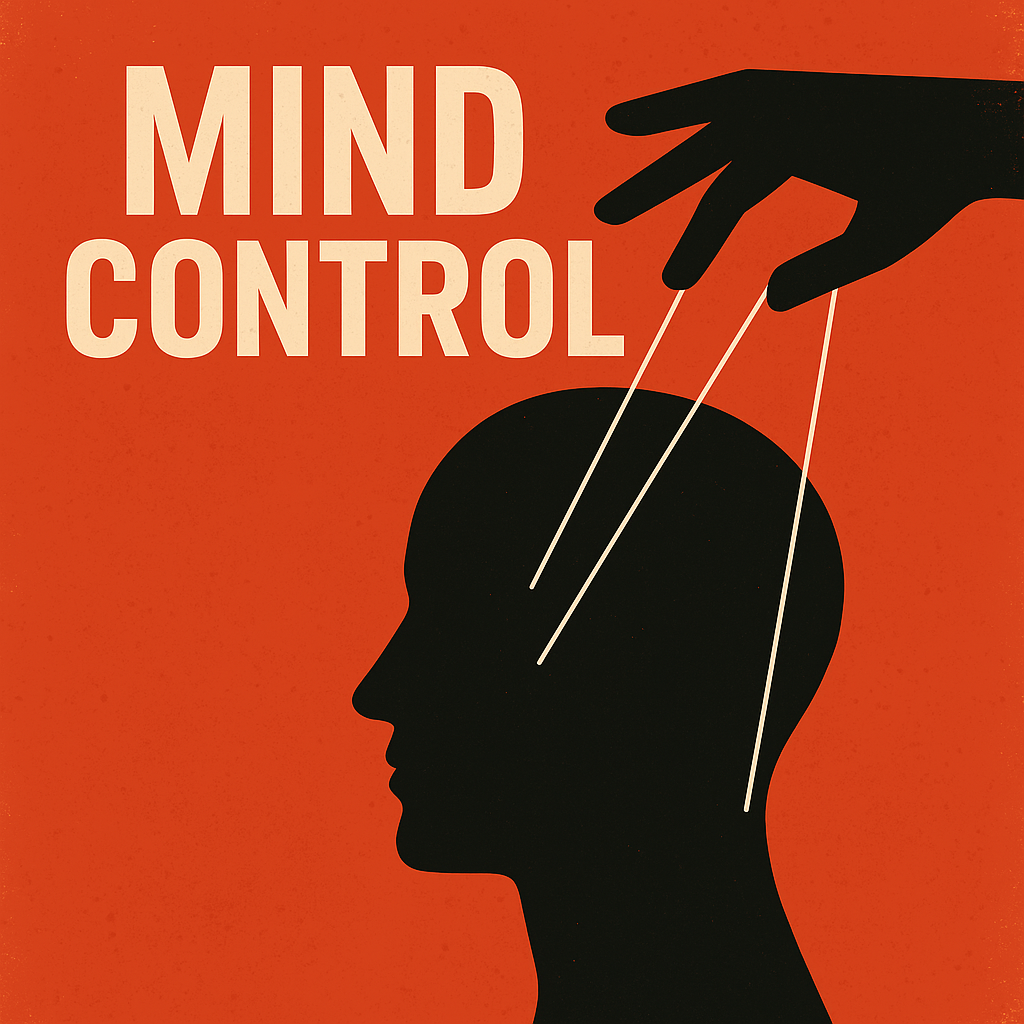
Let’s talk about Mind Control… specifically who controls your mind.

Because If You Don’t Have Control of your Mind, Someone Else Will

Personal Mind Control ... why you need to take control starting right now.

What if I told you your greatest battlefield isn’t out there in the world… but inside your own head?
What if the most important fight for your future isn’t with the economy, or your job, or even your relationships…
but with the thoughts you allow to set up camp in your mind?

Because here’s the truth:
If you don’t control your mind, someone else will.
And you can be sure—it won’t be in your favor.


How Does It Happen?

It’s subtle. Almost invisible. Like water shaping a stone drop by drop.

One suggestion here. One fear planted there. One “just trying to help” from someone who loves you… but never broke out of their own cage.

And before you know it, you’re living out a script that isn’t yours. A play written by someone else.
Parents. Teachers. Friends. Advertisers. Politicians. Even social media algorithms.

Not all of it is malicious. Most of it isn’t.

In fact, many of the people influencing your thoughts and decisions genuinely believe they’re helping you.
But even the most well-intentioned guidance can become a prison if it’s based on fear, limitation, or outdated beliefs.

Let’s look closer.


Your Parents Loved You …
. . . But They Weren’t Perfect

Nobody walks away from childhood without a few scars.

Even in the best homes—full of love, structure, and support—parents still pass along stories.
Stories that were passed to them, and to their parents before that.

  • “People like us don’t do things like that.”
  • “Money is hard to come by.”
  • “It’s better to play it safe.”
  • “You should be grateful and not want too much.”

Sound familiar?

These kinds of beliefs often masquerade as “wisdom.” And they might have made sense… decades ago, in a different time, in a different place, with different resources and different options.

But the world has changed. And if you never challenge those beliefs, they’ll quietly direct your life from the shadows.

You’ll pull back when you should push forward.
You’ll say “I can’t” when you really mean “I’ve never tried.”
You’ll pass up opportunity… because your mind has been trained to avoid risk.

And here’s the dangerous part: you’ll think those thoughts are yours. But they’re not.

They’re inherited.


The Media Is Selling You a Mindset

Now let’s talk about the elephant in the room—media.

Not just “the news,” but advertising, entertainment, social platforms… all of it.

These systems are designed to capture attention, stir emotion, and influence behavior. That’s not conspiracy. That’s business.

If the media can make you feel fearful, angry, or like you’re not enough—
they can sell you something to fix it.
A product. A lifestyle. A political candidate. A belief system.

Ever notice how the news rarely ends with solutions?
It’s not because there aren’t any.
It’s because outrage gets more clicks than calm.

Fear holds attention better than hope.
Division is easier to sell than unity.

And guess what? Every time you scroll… every time you tune in… you’re training your mind.

Not just what to think, but how to think.


You’ve Been Trained—But You Can Retrain

Think about it. Most people spend more time programming their playlists than they do programming their thoughts.

We guard our passwords but let anything into our brain.
We say we want success but surround ourselves with messages that scream scarcity, danger, and division.
We’re hypnotized by repetition.
Entertained by fear.
And slowly… we forget we ever had the power to choose our thoughts in the first place.

But you do.

The ability to think independently—deliberately—is not some rare superpower.
It’s your birthright.
It’s just been neglected.

And now… it’s time to wake it up.


Why It Matters

You were not born to be a pawn in someone else’s plan.

You were not created to echo recycled fears.

And you certainly weren’t put here to live a secondhand life, following a map you didn’t draw.

You were born with the raw material to shape your own reality.

But that starts with the mind.

Control it—and you unlock everything else.


One Final Thought: Who’s In Charge?

Let me leave you with a question.

When your alarm goes off tomorrow morning…
When you look in the mirror…
When you choose what to focus on, what to believe, what to chase—

Who’s in charge?

Is it the scared voice from childhood?
The commercial you saw last night?
The political slogan drilled into your head?

Or is it you?

Take your mind back.
Guard it like your life depends on it.

Because it does.

And once you learn to control your mind…
You’ll find you can shape your habits, your relationships, your outcomes—
your entire life.

That’s power.
And it’s yours for the taking.

Coming soon: This article was about Mind Control and WHY it is important. The upcoming follow-up article, being released on Monday, will give you the step-by-step process to take control of your mind. The title: “How to Control Your Mind for Fun and Profit.

Because taking control isn’t just survival—it’s strategy.
And it just might be the smartest, most profitable move you ever make.